






Diese Website verwendet Cookies und ähnliche Technologien. Dabei handelt es sich um kleine Textdateien, die auf eurem Computer gespeichert und ausgelesen werden. Indem ihr auf "Alles akzeptieren" klickt, stimmt ihr der Verarbeitung von Daten, der Erstellung und Verarbeitung von individuellen Nutzungsprofilen über Websites und über Partner und Geräte hinweg sowie der Übermittlung eurer Daten an Drittanbieter zu, die eure Daten teilweise in Ländern außerhalb der Europäischen Union verarbeiten (GDPR Art. 49). Einzelheiten hierzu findet ihr in den Datenschutzhinweisen. Die Daten werden für Analysen und für eigene Zwecke Dritter verwendet. Weitere Informationen, auch über die Datenverarbeitung durch Drittanbieter und die Möglichkeit des Widerrufs, findet ihr in den Einstellungen und in unseren Datenschutzhinweisen. Hier könnt ihr mit den notwendigen Tools fortfahren.
- Verlag: WVT Wissenschaftlicher Verlag Trier
- Autor: Jan Alber
- Artikel-Nr.: KNV94878442
- ISBN: 9783868219166
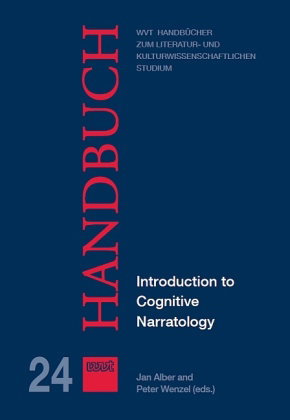
Outlining the principles of the new approach, the present handbook by teachers and young researchers at the English Department of RWTH Aachen University and the Aachen Center for Cognitive and Empirical Literary Studies (ACCELS) revises and extends earlier structuralist models (which tried to identify structures shared by all narratives, thus remaining too static and general) and opens up new perspectives by employing more process-oriented and individuating methodologies. The benefits of cognitive narratology are elucidated in nine chapters, focussing on its general assumptions, concepts and innovating effects on various relevant fields of narratology (such as the analysis of characters, space, time, plot, narrative situations, unreliability and difficult narratives).
Apart from providing a comprehensive bibliography and toolkits of questions for pursuing the new approach, the volume in each chapter also discusses the question of how its hypotheses can be tested in the context of empirical investigations. Since one needs to understand what actual (flesh-and-blood) readers do when they process narratives, the project of cognitive narratology will be most effective if it is combined with an empirical outlook.
TABLE OF CONTENTS
I. What Is Cognitive Narratology? 1
JAN ALBER
II. Cognitive Approaches to Narrative - Mapping the Field 21
SVEN STRASEN
III. Characters - A Cognitive Perspective 43
JULIA VAEßEN
IV. Space 65
JUDITH ECKENHOFF AND KAI TAN
V. Time and the Experience of Narrative 95
RALF SCHNEIDER
VI. Plot 119
DEBORAH DE MUIJNCK, FRANCESCA WESSING, NALIN CAMUR
AND LINDA WETZEL
VII. Narrative Situations 143
PETER WENZEL
VIII. Unreliable Narration from a Cognitive-Narratological Perspective 169
JESSICA JUMPERTZ AND FRANZISKA VON MEER
IX. Cognitive Challenges: Difficult Narratives 191
JAN ALBER AND CLARISSA VON MEER
X. Bibliography 213
XI. Index 249