






Diese Website verwendet Cookies und ähnliche Technologien. Dabei handelt es sich um kleine Textdateien, die auf eurem Computer gespeichert und ausgelesen werden. Indem ihr auf "Alles akzeptieren" klickt, stimmt ihr der Verarbeitung von Daten, der Erstellung und Verarbeitung von individuellen Nutzungsprofilen über Websites und über Partner und Geräte hinweg sowie der Übermittlung eurer Daten an Drittanbieter zu, die eure Daten teilweise in Ländern außerhalb der Europäischen Union verarbeiten (GDPR Art. 49). Einzelheiten hierzu findet ihr in den Datenschutzhinweisen. Die Daten werden für Analysen und für eigene Zwecke Dritter verwendet. Weitere Informationen, auch über die Datenverarbeitung durch Drittanbieter und die Möglichkeit des Widerrufs, findet ihr in den Einstellungen und in unseren Datenschutzhinweisen. Hier könnt ihr mit den notwendigen Tools fortfahren.
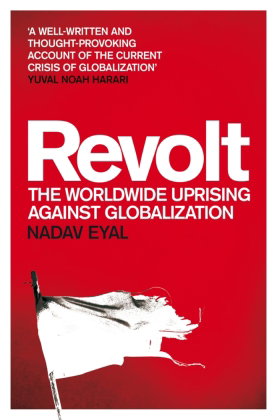
- Verlag: Macmillan Publishers International
- Autor: Nadav Eyal
- Artikel-Nr.: KNV94845534
- ISBN: 9781529031874
'A well-written and thought-provoking account of the current crisis of globalization. Not everyone will agree with Eyal's interpretation, but few will remain indifferent.' - Yuval Noah Harari, author of Sapiens
Revolt is an eloquent and provocative challenge to the prevailing wisdom about the rise of nationalism and populism today. With a vibrant and informed voice, Nadav Eyal illustrates how modern globalization is unsustainable. He contends that the collapse of the current world order is not so much about the imbalance between technological advances and social progress, or the breakdown of liberal democracy, as it is about a passion to upend and destroy power structures that have become hollow, corrupt, or simply unresponsive to urgent needs. Eyal illuminates the forces both benign and malignant that have so rapidly transformed our economic, political, and cultural realities, shedding light not only on the globalized revolution that has come to define our time but also on the counterrevolution waged by those who globalization has marginalized and exploited.
With a mixture of journalistic narrative, penetrating vignettes, and original analysis, Revolt shows that within the mainstream the left and right have much in common. Teasing out the connections among distressed Pennsylvania coal miners, anarchists in communes on the outskirts of Athens, neo-Nazis in Germany, and Syrian refugee families whom he accompanied from the shores of Greece to their destination in Germany, Eyal shows how their stories feed our current state of unrest. More than just an analysis of the present, though, Revolt also takes a hard look at lessons from the past, from the Opium Wars in China to colonialist Haiti to the Marshall Plan. With these historical ties, Eyal shows that the roots of revolt have always been deep and strong. The current uprisings are no passing phenomenon - revolt is the new status quo.