






Diese Website verwendet Cookies und ähnliche Technologien. Dabei handelt es sich um kleine Textdateien, die auf eurem Computer gespeichert und ausgelesen werden. Indem ihr auf "Alles akzeptieren" klickt, stimmt ihr der Verarbeitung von Daten, der Erstellung und Verarbeitung von individuellen Nutzungsprofilen über Websites und über Partner und Geräte hinweg sowie der Übermittlung eurer Daten an Drittanbieter zu, die eure Daten teilweise in Ländern außerhalb der Europäischen Union verarbeiten (GDPR Art. 49). Einzelheiten hierzu findet ihr in den Datenschutzhinweisen. Die Daten werden für Analysen und für eigene Zwecke Dritter verwendet. Weitere Informationen, auch über die Datenverarbeitung durch Drittanbieter und die Möglichkeit des Widerrufs, findet ihr in den Einstellungen und in unseren Datenschutzhinweisen. Hier könnt ihr mit den notwendigen Tools fortfahren.
- Verlag: Wiley & Sons
- Autor: Lee I. Chiba
- Artikel-Nr.: KNV95433916
- ISBN: 9781119583899
As climate change continues to have a significant impact on the modern world, it is crucial to find alternative sources of energy and nutrients for swine production. The development of optimal feeding revolves around a multitude of considerations--genetic variations in the pig, variability, availability, and stability of nutrients in feed ingredients, interactions among nutrients and non-nutritive factors, voluntary feed intake, physical (& social) environment of pigs, and more. Establishing the ideal network of factors will only grow in importance as humans assess the methods for our own food networks.
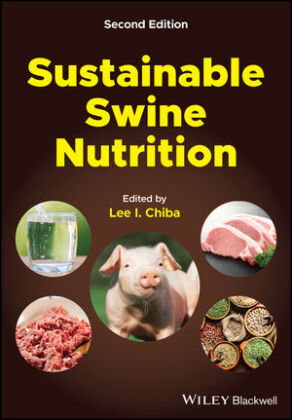
Sustainable Swine Nutrition is a comprehensive book on swine nutrition, covering some fundamental aspects of nutrition--namely digestive physiology, water, protein or amino acids, lipids, carbohydrates, energy metabolism, vitamins, minerals, and nutrition and immunology. Providing the most up-to-date information on each of these areas, a major emphasis of this second edition is on recent developments and current advances in the field, with a focus on pertinent issues linked with energy and nutrients. In doing so, the book highlights topics and issues that can contribute to the ultimate goal of successful and sustainable swine production.
Sustainable Swine Nutrition readers will also find:
* Environmentally friendly, optimal feeding strategies for successful and sustainable swine production
* Recent developments, such as alternative feedstuffs, feed additives, and bioavailability
* Expanded treatment and new chapters on swine physiology, energy and protein, technology, and more
Sustainable Swine Nutrition, Second Edition, is an ideal resource for livestock scientists and industry professionals involved in all aspects of pork production.