






Diese Website verwendet Cookies und ähnliche Technologien. Dabei handelt es sich um kleine Textdateien, die auf eurem Computer gespeichert und ausgelesen werden. Indem ihr auf "Alles akzeptieren" klickt, stimmt ihr der Verarbeitung von Daten, der Erstellung und Verarbeitung von individuellen Nutzungsprofilen über Websites und über Partner und Geräte hinweg sowie der Übermittlung eurer Daten an Drittanbieter zu, die eure Daten teilweise in Ländern außerhalb der Europäischen Union verarbeiten (GDPR Art. 49). Einzelheiten hierzu findet ihr in den Datenschutzhinweisen. Die Daten werden für Analysen und für eigene Zwecke Dritter verwendet. Weitere Informationen, auch über die Datenverarbeitung durch Drittanbieter und die Möglichkeit des Widerrufs, findet ihr in den Einstellungen und in unseren Datenschutzhinweisen. Hier könnt ihr mit den notwendigen Tools fortfahren.
- Verlag: MIT Press
- Autor: Cherian George
- Artikel-Nr.: KNV93177770
- ISBN: 9780262543019
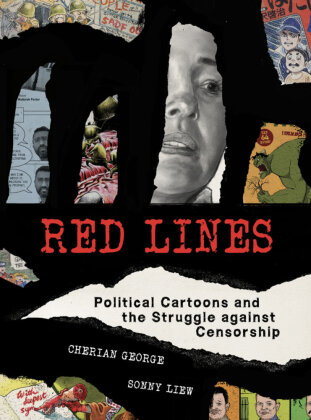
Why do the powerful feel so threatened by political cartoons? Cartoons don't tell secrets or move markets. Yet, as Cherian George and Sonny Liew show us in Red Lines, cartoonists have been harassed, trolled, sued, fired, jailed, attacked, and assassinated for their insolence. The robustness of political cartooning--one of the most elemental forms of political speech--says something about the health of democracy. In a lively graphic narrative--illustrated by Liew, himself a prize-winning cartoonist--Red Lines crisscrosses the globe to feel the pulse of a vocation under attack.
A Syrian cartoonist insults the president and has his hands broken by goons. An Indian cartoonist stands up to misogyny and receives rape threats. An Israeli artist finds his antiracist works censored by social media algorithms. And the New York Times, caught in the crossfire of the culture wars, decides to stop publishing editorial cartoons completely. Red Lines studies thin-skinned tyrants, the invisible hand of market censorship, and demands in the name of social justice to rein in the right to offend. It includes interviews with more than sixty cartoonists and insights from art historians, legal scholars, and political scientists--all presented in graphic form. This engaging account makes it clear that cartoon censorship doesn't just matter to cartoonists and their fans. When the red lines are misapplied, all citizens are potential victims.