






Diese Website verwendet Cookies und ähnliche Technologien. Dabei handelt es sich um kleine Textdateien, die auf eurem Computer gespeichert und ausgelesen werden. Indem ihr auf "Alles akzeptieren" klickt, stimmt ihr der Verarbeitung von Daten, der Erstellung und Verarbeitung von individuellen Nutzungsprofilen über Websites und über Partner und Geräte hinweg sowie der Übermittlung eurer Daten an Drittanbieter zu, die eure Daten teilweise in Ländern außerhalb der Europäischen Union verarbeiten (GDPR Art. 49). Einzelheiten hierzu findet ihr in den Datenschutzhinweisen. Die Daten werden für Analysen und für eigene Zwecke Dritter verwendet. Weitere Informationen, auch über die Datenverarbeitung durch Drittanbieter und die Möglichkeit des Widerrufs, findet ihr in den Einstellungen und in unseren Datenschutzhinweisen. Hier könnt ihr mit den notwendigen Tools fortfahren.
- Verlag: NYRB Classics
- Autor: Aleksander Tisma
- Artikel-Nr.: KNV92866144
- ISBN: 9781681374390
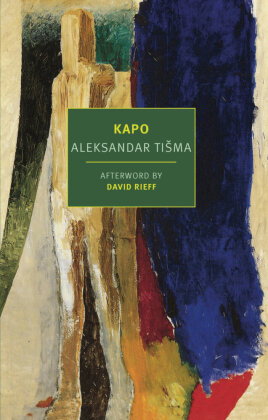
The Book of Blam, The Use of Man, Kapo: In these three unsparing novels the Yugoslav author Aleksandar Ti ma anatomized the plight of those who survived the Second World War and the death camps, only to live on in a death-haunted world. Blam simply lucked out and can hardly face himself in the mirror. By contrast, the teenage friends in The Use of Man are condemned to live on and on while enduring every affliction. Kapo is about Lamian, who made it through Auschwitz by serving his German masters, knowing that at any moment and for any reason his special status might be revoked.
But the war is over now. Auschwitz is in the past. Lamian has settled down in the Bosnian town of Banja Luka, where he has a respectable job as a superintendent in the railyard. Everything is normal enough. Then one day in the paper he comes on the name of Helena Lifka, a woman like him a Yugoslav and a Jew he raped in the camp. Not long after he sees her, aged and ungainly, Lamian is flooded with guilt and terror.
Kapo, like Ti ma s other great novels, is not simply a document or an act of witness. Ti ma s terrible gift is to see with an artist s dispassionate clarity how fear, violence, guilt, and desire whether for life, love, or simple understanding are inextricably knotted together in the human breast.