






Diese Website verwendet Cookies und ähnliche Technologien. Dabei handelt es sich um kleine Textdateien, die auf eurem Computer gespeichert und ausgelesen werden. Indem ihr auf "Alles akzeptieren" klickt, stimmt ihr der Verarbeitung von Daten, der Erstellung und Verarbeitung von individuellen Nutzungsprofilen über Websites und über Partner und Geräte hinweg sowie der Übermittlung eurer Daten an Drittanbieter zu, die eure Daten teilweise in Ländern außerhalb der Europäischen Union verarbeiten (GDPR Art. 49). Einzelheiten hierzu findet ihr in den Datenschutzhinweisen. Die Daten werden für Analysen und für eigene Zwecke Dritter verwendet. Weitere Informationen, auch über die Datenverarbeitung durch Drittanbieter und die Möglichkeit des Widerrufs, findet ihr in den Einstellungen und in unseren Datenschutzhinweisen. Hier könnt ihr mit den notwendigen Tools fortfahren.
- Verlag: Hatje Cantz Verlag
- Autor: Eckhart Gillen
- Artikel-Nr.: KNV95430322
- ISBN: 9783775752169
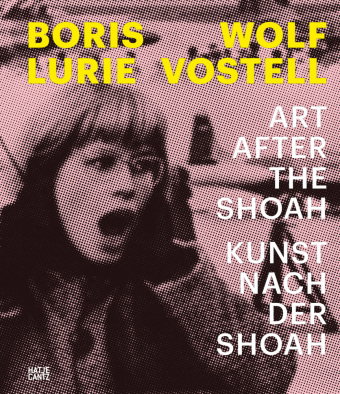
The art of Boris Lurie (*1924, Leningrad) and Wolf Vostell (*1932, Leverkusen) is determined by the breach of civilization in Germany in 1933, which made the German genocide of German and European Jews possible. Both artists make the Shoah the subject of their work in a radical way. Initially working-independently of one another-with the means of painting, they turned during the 1950s to exploring the stylistic devices of the first avant-garde, including techniques of collage and montage. Vostell later develops the subject further in his happenings and video art while Lurie takes up writing. In 1964 the artists met in New York and began a lifelong friendship-this is the first exhibition to present their works together.
After surviving several labor and concentration camps, the Jewish artist BORIS LURIE (1924-2008) emigrated to New York in 1946, where he established the NO!art movement in 1959. Often through direct references to the Shoah, Lurie commented on the society and consumer culture of his time.
The German artist WOLF VOSTELL (1932-1998) was a protagonist of the Fluxus movement and a pioneer of happening- and video art. Vostell confronted post-war European audiences with its recent past in a variety of ways.