






Diese Website verwendet Cookies und ähnliche Technologien. Dabei handelt es sich um kleine Textdateien, die auf eurem Computer gespeichert und ausgelesen werden. Indem ihr auf "Alles akzeptieren" klickt, stimmt ihr der Verarbeitung von Daten, der Erstellung und Verarbeitung von individuellen Nutzungsprofilen über Websites und über Partner und Geräte hinweg sowie der Übermittlung eurer Daten an Drittanbieter zu, die eure Daten teilweise in Ländern außerhalb der Europäischen Union verarbeiten (GDPR Art. 49). Einzelheiten hierzu findet ihr in den Datenschutzhinweisen. Die Daten werden für Analysen und für eigene Zwecke Dritter verwendet. Weitere Informationen, auch über die Datenverarbeitung durch Drittanbieter und die Möglichkeit des Widerrufs, findet ihr in den Einstellungen und in unseren Datenschutzhinweisen. Hier könnt ihr mit den notwendigen Tools fortfahren.
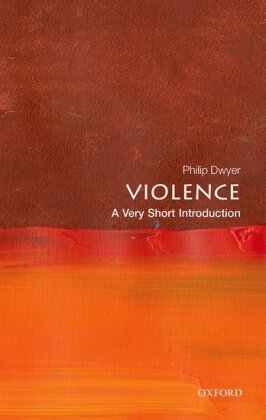
- Verlag: Oxford University Press
- Autor: Philip Dwyer
- Artikel-Nr.: KNV95451464
- ISBN: 9780198831730
Violence is part and parcel of human history and of human nature. It is one of our most distinctive traits, the one thing that all cultures and societies, across time, share in common. It has defined not only the ways in which individuals relate to each other, but also how collective entities and states have interacted with each other over the millennia. All societies are violent and all individuals have the capacity for violence. However, not all societies and not all individuals are equally violent, and nor does violence exist with the same intensity across cultures.
This Very Short Introduction examines the more visible, physical acts of violence - interpersonal, gendered, collective, religious, sexual, criminal, and political - in the modern world. It explores how violence in the pre-modern world was different from the modern world, and what is significant about those differences. It also discusses what violence is by examining understandings of the ideas, values, and cultural practices embedded in an act of violence, and considering acts of violence as the outcome of a process dependent on the cultural context in which they take place. Along the way Dwyer considers some core questions, asking whether violence is always 'bad', and if there are any limits to human violence? Why is it that what was once considered acceptable - wife beating, duelling, slavery - at some point becomes unacceptable in some societies and cultures, and yet continues in others? And finally, are we becoming more or less violent?
ABOUT THE SERIES: The Very Short Introductions series from Oxford University Press contains hundreds of titles in almost every subject area. These pocket-sized books are the perfect way to get ahead in a new subject quickly. Our expert authors combine facts, analysis, perspective, new ideas, and enthusiasm to make interesting and challenging topics highly readable.