






Diese Website verwendet Cookies und ähnliche Technologien. Dabei handelt es sich um kleine Textdateien, die auf eurem Computer gespeichert und ausgelesen werden. Indem ihr auf "Alles akzeptieren" klickt, stimmt ihr der Verarbeitung von Daten, der Erstellung und Verarbeitung von individuellen Nutzungsprofilen über Websites und über Partner und Geräte hinweg sowie der Übermittlung eurer Daten an Drittanbieter zu, die eure Daten teilweise in Ländern außerhalb der Europäischen Union verarbeiten (GDPR Art. 49). Einzelheiten hierzu findet ihr in den Datenschutzhinweisen. Die Daten werden für Analysen und für eigene Zwecke Dritter verwendet. Weitere Informationen, auch über die Datenverarbeitung durch Drittanbieter und die Möglichkeit des Widerrufs, findet ihr in den Einstellungen und in unseren Datenschutzhinweisen. Hier könnt ihr mit den notwendigen Tools fortfahren.
- Verlag: Kogan Page
- Autor: Karim Ullah
- Artikel-Nr.: KNV61761721
- ISBN: 9780749480516
WINNER: The HEC Outstanding Research Award 2019
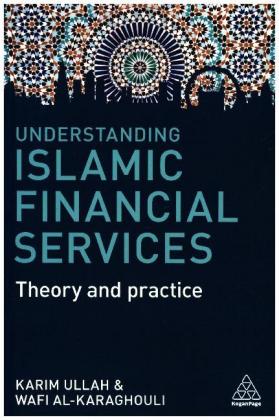
Understanding Islamic Financial Services offers fresh insights on the Islamic financial system. The importance of this system cannot be underestimated. Experts expect that it is likely to sustain double digit growth globally over the next few years, and demand for professionals in the area has never been higher, both in the UK and around the world.
While other texts on the subject look at the basic concepts, principles, contracts and financial products used in Islamic banking and finance, Understanding Islamic Financial Services goes one step further and provides a new context, identifying four levels on which the Islamic Financial system operates: product level, institution level, market level and inter-market level. It considers Islamic banking and finance as a multi-level service system, an approach which will enable students and professionals of Islamic finance to gain a more in-depth, holistic understanding of how the system functions.
Understanding Islamic Financial Services covers contemporary developments in service science (e.g. service theories, service visualization tools and service co-creation concepts) and implications for the development and sustainability of Islamic financial services. Examples from practice enliven the text and allow the reader to relate the theories and principles discussed to current practice.