






Diese Website verwendet Cookies und ähnliche Technologien. Dabei handelt es sich um kleine Textdateien, die auf eurem Computer gespeichert und ausgelesen werden. Indem ihr auf "Alles akzeptieren" klickt, stimmt ihr der Verarbeitung von Daten, der Erstellung und Verarbeitung von individuellen Nutzungsprofilen über Websites und über Partner und Geräte hinweg sowie der Übermittlung eurer Daten an Drittanbieter zu, die eure Daten teilweise in Ländern außerhalb der Europäischen Union verarbeiten (GDPR Art. 49). Einzelheiten hierzu findet ihr in den Datenschutzhinweisen. Die Daten werden für Analysen und für eigene Zwecke Dritter verwendet. Weitere Informationen, auch über die Datenverarbeitung durch Drittanbieter und die Möglichkeit des Widerrufs, findet ihr in den Einstellungen und in unseren Datenschutzhinweisen. Hier könnt ihr mit den notwendigen Tools fortfahren.
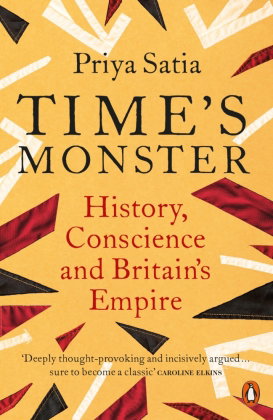
- Verlag: Penguin Books UK
- Autor: Priya Satia
- Artikel-Nr.: KNV91894878
- ISBN: 9780141993928
CHOSEN AS A BOOK OF THE YEAR BY NEW STATESMAN AND BBC HISTORY MAGAZINE
'In this searing book, Priya Satia demonstrates, yet again, that she is one of our most brilliant and original historians' Sunil Amrith, author of Unruly Waters
For generations, the history of the British empire was written by its victors. British historians' accounts of conquest guided the consolidation of imperial rule in India, the Middle East, Africa and the Caribbean. Their narratives of the development of imperial governance licensed the brutal suppression of colonial rebellion. Their reimagining of empire during the two world wars compromised the force of decolonization.
In this brilliant work, Priya Satia shows how these historians not only interpreted the major political events of their time but also shaped the future that followed. History emerged as a mode of ethics in the modern period, endowing historians from John Stuart Mill to Winston Churchill with outsized policymaking power. Braided with this story is an account of alternative visions articulated by anticolonial thinkers such as William Blake, Mahatma Gandhi and E. P. Thompson. By the mid-twentieth century, their approaches had reshaped the discipline of history and the ethics that came with it.
Time's Monster reveals the dramatic consequences of writing history today as much as in the past. Against the backdrop of enduring global inequalities and debates about reparations and the legacy of empire, Satia offers us a hugely important and urgent moral voice.