






Diese Website verwendet Cookies und ähnliche Technologien. Dabei handelt es sich um kleine Textdateien, die auf eurem Computer gespeichert und ausgelesen werden. Indem ihr auf "Alles akzeptieren" klickt, stimmt ihr der Verarbeitung von Daten, der Erstellung und Verarbeitung von individuellen Nutzungsprofilen über Websites und über Partner und Geräte hinweg sowie der Übermittlung eurer Daten an Drittanbieter zu, die eure Daten teilweise in Ländern außerhalb der Europäischen Union verarbeiten (GDPR Art. 49). Einzelheiten hierzu findet ihr in den Datenschutzhinweisen. Die Daten werden für Analysen und für eigene Zwecke Dritter verwendet. Weitere Informationen, auch über die Datenverarbeitung durch Drittanbieter und die Möglichkeit des Widerrufs, findet ihr in den Einstellungen und in unseren Datenschutzhinweisen. Hier könnt ihr mit den notwendigen Tools fortfahren.
- Verlag: De Gruyter
- Autor: Frances Pownall
- Artikel-Nr.: KNV95429097
- ISBN: 9783110622409
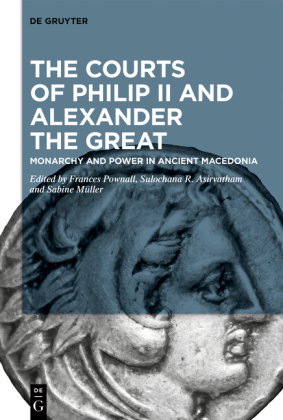
Recent scholarship has recognized that Philip II and Alexander the Great adopted elements of their self-fashioning and court ceremonial from previous empires in the Ancient Near East, but it is generally assumed that the advent of the Macedonian court as a locus of politics and culture occurred only in the post-Alexander landscape of the Hellenistic Successors. This volume of ground-breaking essays by leading scholars on Ancient Macedonia goes beyond existing research questions to assess the profound impact of Philip and Alexander on court culture throughout the ages. The papers in this volume offer a thematic approach, focusing upon key institutional, cultural, social, ideological, and iconographical aspects of the reigns of Philip and Alexander. The authors treat the Macedonian court not only as a historical reality, but also as an object of fascination to contemporary Greeks that ultimately became a topos in later reflections on the lives and careers of Philip and Alexander. This collection of papers provides a paradigm-shifting recognition of the seminal roles of Philip and Alexander in the emergence of a new kind of Macedonian kingship and court culture that was spectacularly successful and transformative.