






Diese Website verwendet Cookies und ähnliche Technologien. Dabei handelt es sich um kleine Textdateien, die auf eurem Computer gespeichert und ausgelesen werden. Indem ihr auf "Alles akzeptieren" klickt, stimmt ihr der Verarbeitung von Daten, der Erstellung und Verarbeitung von individuellen Nutzungsprofilen über Websites und über Partner und Geräte hinweg sowie der Übermittlung eurer Daten an Drittanbieter zu, die eure Daten teilweise in Ländern außerhalb der Europäischen Union verarbeiten (GDPR Art. 49). Einzelheiten hierzu findet ihr in den Datenschutzhinweisen. Die Daten werden für Analysen und für eigene Zwecke Dritter verwendet. Weitere Informationen, auch über die Datenverarbeitung durch Drittanbieter und die Möglichkeit des Widerrufs, findet ihr in den Einstellungen und in unseren Datenschutzhinweisen. Hier könnt ihr mit den notwendigen Tools fortfahren.
- Verlag: MIT Press
- Autor: Alessio Fasano
- Artikel-Nr.: KNV95460308
- ISBN: 9780262543835
A detailed and scientifically rigorous survey . . . gives readers a clearer sense of the current state of medical knowledge. The New York Review of Books
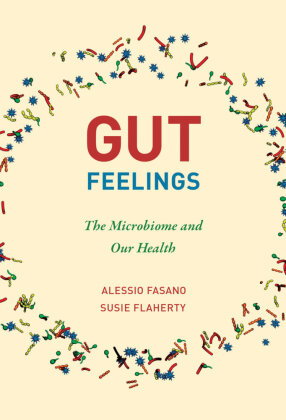
We are at the dawn of a new scientific revolution. Our understanding of how to treat and prevent diseases has been transformed by knowledge of the microbiome the rich ecosystem of microorganisms in and on every human. In Gut Feelings, Alessio Fasano and Susie Flaherty show why we must go beyond the older, myopic view of microorganisms as our enemies to a broader understanding of the microbiome as a parallel civilization that we need to understand, respect, and engage with for the benefit of our own health.
Recent advances in understanding the microbiome and its role in human health dovetail with the development of personalized or precision medicine to create treatments and prevention programs targeted to the molecular imprint of an individual. Fasano and Flaherty explore the microbiome's part in such diseases as gut inflammatory disorders, obesity, neurological conditions, and cancer, and they explain new research in prebiotics, probiotics, synbiotics, and psychobiotics. They also discuss the microbiome and immune function, including a possible role in COVID-19 treatment.
By simultaneously expanding our perspective to encompass large datasets and multiple factors in human health, and narrowing our focus to identify the individual communities in the human microbiome, we will enlarge and perhaps reinvent our understanding of how to combat disease and maintain health.