






Diese Website verwendet Cookies und ähnliche Technologien. Dabei handelt es sich um kleine Textdateien, die auf eurem Computer gespeichert und ausgelesen werden. Indem ihr auf "Alles akzeptieren" klickt, stimmt ihr der Verarbeitung von Daten, der Erstellung und Verarbeitung von individuellen Nutzungsprofilen über Websites und über Partner und Geräte hinweg sowie der Übermittlung eurer Daten an Drittanbieter zu, die eure Daten teilweise in Ländern außerhalb der Europäischen Union verarbeiten (GDPR Art. 49). Einzelheiten hierzu findet ihr in den Datenschutzhinweisen. Die Daten werden für Analysen und für eigene Zwecke Dritter verwendet. Weitere Informationen, auch über die Datenverarbeitung durch Drittanbieter und die Möglichkeit des Widerrufs, findet ihr in den Einstellungen und in unseren Datenschutzhinweisen. Hier könnt ihr mit den notwendigen Tools fortfahren.
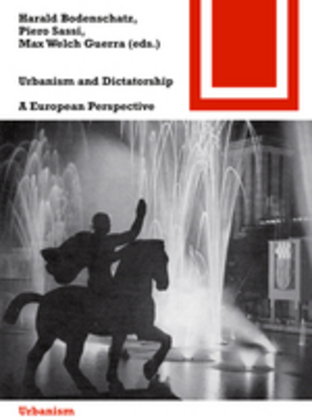
- Verlag: Birkhäuser Berlin
- Autor: Harald Bodenschatz
- Artikel-Nr.: KNV49542516
- ISBN: 9783038216605
In the first half of the twentieth century, urban design under the influence of European dictatorships not only served to support the rulers in their own country, but also to gain the recognition of the democratic states. After the National Socialist regime came to power in Germany, urban design increasingly became the trump card in the competition amongst the large dictatorships in Europe - almost as in the time of absolutism. Irrespective of all conflicts and political orientations, there was an intense exchange of ideas amongst the states in Europe.
It is therefore not adequate to make an assessment just from the point of view of the dictatorships. The overarching view helps to understand the special characteristics of each dictatorship and also disproves some simplified interpretations of their respective approaches to urban design. That is not just of historic interest; the discussion of the issue of dictatorships is always also an expression of our social condition, our commemorative culture, our ability to recognize old and new forms of dictatorship - even today!
The book discusses the state of research into urban design under five dictatorships during the first half of the twentieth century, and presents new research results based on examples.