






Diese Website verwendet Cookies und ähnliche Technologien. Dabei handelt es sich um kleine Textdateien, die auf eurem Computer gespeichert und ausgelesen werden. Indem ihr auf "Alles akzeptieren" klickt, stimmt ihr der Verarbeitung von Daten, der Erstellung und Verarbeitung von individuellen Nutzungsprofilen über Websites und über Partner und Geräte hinweg sowie der Übermittlung eurer Daten an Drittanbieter zu, die eure Daten teilweise in Ländern außerhalb der Europäischen Union verarbeiten (GDPR Art. 49). Einzelheiten hierzu findet ihr in den Datenschutzhinweisen. Die Daten werden für Analysen und für eigene Zwecke Dritter verwendet. Weitere Informationen, auch über die Datenverarbeitung durch Drittanbieter und die Möglichkeit des Widerrufs, findet ihr in den Einstellungen und in unseren Datenschutzhinweisen. Hier könnt ihr mit den notwendigen Tools fortfahren.
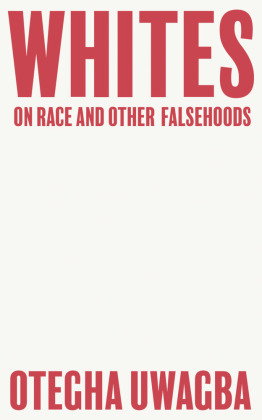
- Verlag: HarperCollins UK
- Autor: Otegha Uwagba
- Artikel-Nr.: KNV95554012
- ISBN: 9780008440428
'An important, timely personal essay' OBSERVER BEST BOOKS OF 2020
'Not taking any bullshit...sharp and stylish...brutal' GUARDIAN BOOK OF THE YEAR
In this powerful and timely personal essay, best-selling author Otegha Uwagba reflects on racism, whiteness, and the mental labour required of Black people to navigate the two.
Presented as a record of Uwagba's observations on this era-defining moment in history - that is, George Floyd's brutal murder and the subsequent protests and scrutiny of institutional racism - Whites explores the colossal burden of whiteness, as told by someone who is in her own words, 'a reluctant expert'.
What is it like to endure both racism and white efforts at anti-racism, sometimes from the very same people? How do Black people navigate the gap between what they know to be true, and the version of events that white society can bring itself to tolerate? What does true allyship actually look like - and is it even possible?
Addressing complex interracial dynamics and longstanding tensions with characteristically unflinching honesty, Uwagba deftly interrogates the status quo, and in doing so provides an intimate and deeply compelling portrayal of an unavoidable facet of the Black experience.