






Diese Website verwendet Cookies und ähnliche Technologien. Dabei handelt es sich um kleine Textdateien, die auf eurem Computer gespeichert und ausgelesen werden. Indem ihr auf "Alles akzeptieren" klickt, stimmt ihr der Verarbeitung von Daten, der Erstellung und Verarbeitung von individuellen Nutzungsprofilen über Websites und über Partner und Geräte hinweg sowie der Übermittlung eurer Daten an Drittanbieter zu, die eure Daten teilweise in Ländern außerhalb der Europäischen Union verarbeiten (GDPR Art. 49). Einzelheiten hierzu findet ihr in den Datenschutzhinweisen. Die Daten werden für Analysen und für eigene Zwecke Dritter verwendet. Weitere Informationen, auch über die Datenverarbeitung durch Drittanbieter und die Möglichkeit des Widerrufs, findet ihr in den Einstellungen und in unseren Datenschutzhinweisen. Hier könnt ihr mit den notwendigen Tools fortfahren.
- Verlag: Penguin Books UK
- Autor: Julian Hoppit
- Artikel-Nr.: KNV95631477
- ISBN: 9780141992266
'An invaluable primer to some of the underlying tensions behind contemporary political debate' Financial Times
It has always been an important part of British self-image to see the United Kingdom as an ancient, organic and sensibly managed place, in striking contrast to the convulsions of other European countries. Yet, as Julian Hoppit makes clear in this fascinating and surprising book, beneath the complacent surface the United Kingdom has in fact been in a constant, often very tense argument with itself about how it should be run and, most significantly, who should pay for what.
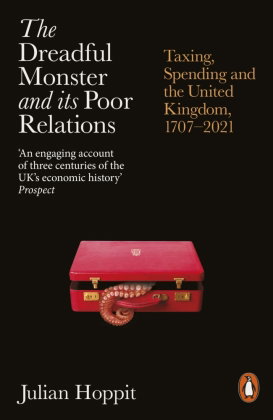
The book takes its argument from an eighteenth century cartoon which shows the central state as the 'Dreadful Monster', gorging itself at the dinner table on all the taxes it can grab. Meanwhile the 'Poor Relations' - Scotland, Wales and Ireland, both poor because of tax but also poor in the sense of needing special treatment - are viewed in London as an endless 'drain on the state'. With drastically different levels of prosperity, population, industry, agriculture and accessibility between the United Kingdom's different nations, what is a fair basis for paying for the state?