






Diese Website verwendet Cookies und ähnliche Technologien. Dabei handelt es sich um kleine Textdateien, die auf eurem Computer gespeichert und ausgelesen werden. Indem ihr auf "Alles akzeptieren" klickt, stimmt ihr der Verarbeitung von Daten, der Erstellung und Verarbeitung von individuellen Nutzungsprofilen über Websites und über Partner und Geräte hinweg sowie der Übermittlung eurer Daten an Drittanbieter zu, die eure Daten teilweise in Ländern außerhalb der Europäischen Union verarbeiten (GDPR Art. 49). Einzelheiten hierzu findet ihr in den Datenschutzhinweisen. Die Daten werden für Analysen und für eigene Zwecke Dritter verwendet. Weitere Informationen, auch über die Datenverarbeitung durch Drittanbieter und die Möglichkeit des Widerrufs, findet ihr in den Einstellungen und in unseren Datenschutzhinweisen. Hier könnt ihr mit den notwendigen Tools fortfahren.
- Verlag: Penguin Books UK
- Autor: Paul Mason
- Artikel-Nr.: KNV95631553
- ISBN: 9780141996400
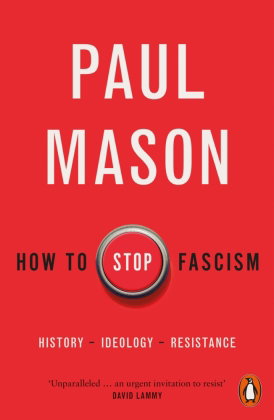
'For its historical depth, analytical vigour and mobilizational potential, this book is unparalleled ... every page is an urgent invitation to resist' David Lammy MP
The bestselling author of PostCapitalism offers a guide to resisting the far right
The far right is on the rise across the world. From Modi's India to Bolsonaro's Brazil and Erdogan's Turkey, fascism is not a horror that we have left in the past; it is a recurring nightmare that is happening again - and we need to find a better way to fight it.
In How to Stop Fascism, Paul Mason offers a radical, hopeful blueprint for resisting and defeating the new far right. The book is both a chilling portrait of contemporary fascism, and a compelling history of the fascist phenomenon: its psychological roots, political theories and genocidal logic. Fascism, Mason powerfully argues, is a symptom of capitalist failure, and it has haunted us throughout the twentieth century.
History shows us the conditions that breed fascism, and how it can be successfully overcome. But it is up to us in the present to challenge it, and time is running out. From the ashes of COVID-19, we have an opportunity to create a fairer, more equal society. To do so, we must ask ourselves: what kind of world do we want to live in? And what are we going to do about it?