






Diese Website verwendet Cookies und ähnliche Technologien. Dabei handelt es sich um kleine Textdateien, die auf eurem Computer gespeichert und ausgelesen werden. Indem ihr auf "Alles akzeptieren" klickt, stimmt ihr der Verarbeitung von Daten, der Erstellung und Verarbeitung von individuellen Nutzungsprofilen über Websites und über Partner und Geräte hinweg sowie der Übermittlung eurer Daten an Drittanbieter zu, die eure Daten teilweise in Ländern außerhalb der Europäischen Union verarbeiten (GDPR Art. 49). Einzelheiten hierzu findet ihr in den Datenschutzhinweisen. Die Daten werden für Analysen und für eigene Zwecke Dritter verwendet. Weitere Informationen, auch über die Datenverarbeitung durch Drittanbieter und die Möglichkeit des Widerrufs, findet ihr in den Einstellungen und in unseren Datenschutzhinweisen. Hier könnt ihr mit den notwendigen Tools fortfahren.
- Verlag: Penguin Books UK
- Autor: Niall Ferguson
- Artikel-Nr.: KNV95631612
- ISBN: 9780141995557
'Magisterial ... Immensely readable' Douglas Alexander, Financial Times
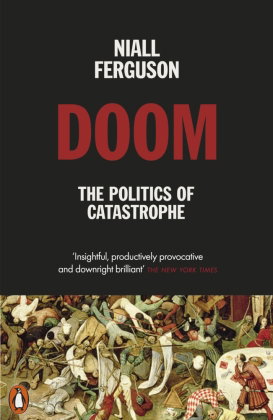
'Insightful, productively provocative and downright brilliant' New York Times
A compelling history of catastrophes and their consequences, from 'the most brilliant British historian of his generation' (The Times)
Disasters are inherently hard to predict. But when catastrophe strikes, we ought to be better prepared than the Romans were when Vesuvius erupted or medieval Italians when the Black Death struck. We have science on our side, after all. Yet the responses of many developed countries to a new pathogen from China were badly bungled. Why?
While populist rulers certainly performed poorly in the face of the pandemic, Niall Ferguson argues that more profound pathologies were at work - pathologies already visible in our responses to earlier disasters.
Drawing from multiple disciplines, including economics and network science, Doom: The Politics of Catastrophe offers not just a history but a general theory of disaster. As Ferguson shows, governments must learn to become less bureaucratic if we are to avoid the impending doom of irreversible decline.
'Stimulating, thought-provoking ... Readers will find much to relish' Martin Bentham, Evening Standard