






Diese Website verwendet Cookies und ähnliche Technologien. Dabei handelt es sich um kleine Textdateien, die auf eurem Computer gespeichert und ausgelesen werden. Indem ihr auf "Alles akzeptieren" klickt, stimmt ihr der Verarbeitung von Daten, der Erstellung und Verarbeitung von individuellen Nutzungsprofilen über Websites und über Partner und Geräte hinweg sowie der Übermittlung eurer Daten an Drittanbieter zu, die eure Daten teilweise in Ländern außerhalb der Europäischen Union verarbeiten (GDPR Art. 49). Einzelheiten hierzu findet ihr in den Datenschutzhinweisen. Die Daten werden für Analysen und für eigene Zwecke Dritter verwendet. Weitere Informationen, auch über die Datenverarbeitung durch Drittanbieter und die Möglichkeit des Widerrufs, findet ihr in den Einstellungen und in unseren Datenschutzhinweisen. Hier könnt ihr mit den notwendigen Tools fortfahren.
- Verlag: Oxford University Press
- Autor: Laura M. Argys
- Artikel-Nr.: KNV95629266
- ISBN: 9780190093389
An accessible overview of the power of women in the economy and the obstacles they face
Women are joining the workforce in increasing numbers, making inroads as entrepreneurs and leaders, acquiring more education, marrying later, and having fewer children - all trends consistent with spending a far greater fraction of their adult lives in the labor force. And yet, even as women break the glass ceiling and challenge gender and sexual norms, they are told they need to "lean in" and powerful movements like #TimesUP and #MeToo are still necessary to expose and overcome endemic discrimination, exploitation, harassment, and worse.
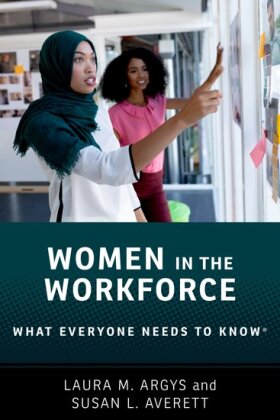
Women in the Workforce: What Everyone Needs to Know ® provides an essential and accessible introduction to the significance of women in the economy and the obstacles they face in claiming equal status. Economists Laura M. Argys and Susan L. Averett tackle timely topics like the wage gap, "women's work," and gendered workplace interactions in an easy-to-read question and answer format. The book focuses on the choices people make and how these are framed by institutional impediments that create inequalities in the options available to men and women. Argys and Averett highlight how the experience of being a woman in the labor market varies, sometimes dramatically, by race, ethnicity, sexual orientation, and socioeconomic status. They also explore how living in cities, towns, and rural areas influence choices and outcomes.
Covering a range of topics, from breastfeeding and work, earnings penalties for women who have taken time away from work, and childcare while women work, to the gender pay gap and the distinctive challenges women face as they age and transition to retirement, this book answers the essential questions surrounding women in the workforce.