






Diese Website verwendet Cookies und ähnliche Technologien. Dabei handelt es sich um kleine Textdateien, die auf eurem Computer gespeichert und ausgelesen werden. Indem ihr auf "Alles akzeptieren" klickt, stimmt ihr der Verarbeitung von Daten, der Erstellung und Verarbeitung von individuellen Nutzungsprofilen über Websites und über Partner und Geräte hinweg sowie der Übermittlung eurer Daten an Drittanbieter zu, die eure Daten teilweise in Ländern außerhalb der Europäischen Union verarbeiten (GDPR Art. 49). Einzelheiten hierzu findet ihr in den Datenschutzhinweisen. Die Daten werden für Analysen und für eigene Zwecke Dritter verwendet. Weitere Informationen, auch über die Datenverarbeitung durch Drittanbieter und die Möglichkeit des Widerrufs, findet ihr in den Einstellungen und in unseren Datenschutzhinweisen. Hier könnt ihr mit den notwendigen Tools fortfahren.
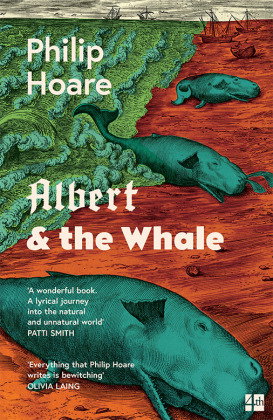
- Verlag: HarperCollins UK
- Autor: Philip Hoare
- Artikel-Nr.: KNV95537085
- ISBN: 9780008323325
A NEW STATESMAN BOOK OF THE YEAR
AN OBSERVER BEST ART BOOK OF 2021
SHORTLISTED FOR THE RATHBONES FOLIO PRIZE 2022
'This is a wonderful book. A lyrical journey into the natural and unnatural world' Patti Smith
'Everything Philip Hoare writes is bewitching' Olivia Laing
An illuminating exploration of the intersection between life, art and the sea from the award-winning author of Leviathan.
Albrecht Dürer changed the way we saw nature through art. From his prints in 1498 of the plague ridden Apocalypse - the first works mass produced by any artist - to his hyper-real images of animals and plants, his art was a revelation: it showed us who we are but it also foresaw our future. It is a vision that remains startlingly powerful and seductive, even now.
In Albert & the Whale, Philip Hoare sets out to discover why Dürer's art endures. He encounters medieval alchemists and modernist poets, eccentric emperors and queer soul rebels, ambassadorial whales and enigmatic pop artists. He witnesses the miraculous birth of Dürer's fantastical rhinoceros and his hermaphroditic hare, and he traces the fate of the star-crossed leviathan that the artist pursued. And as the author swims from Europe to America and beyond, these prophetic artists and downed angels provoke awkward questions. What is natural or unnatural? Is art a fatal contract? Or does it in fact have the power to save us?