






Diese Website verwendet Cookies und ähnliche Technologien. Dabei handelt es sich um kleine Textdateien, die auf eurem Computer gespeichert und ausgelesen werden. Indem ihr auf "Alles akzeptieren" klickt, stimmt ihr der Verarbeitung von Daten, der Erstellung und Verarbeitung von individuellen Nutzungsprofilen über Websites und über Partner und Geräte hinweg sowie der Übermittlung eurer Daten an Drittanbieter zu, die eure Daten teilweise in Ländern außerhalb der Europäischen Union verarbeiten (GDPR Art. 49). Einzelheiten hierzu findet ihr in den Datenschutzhinweisen. Die Daten werden für Analysen und für eigene Zwecke Dritter verwendet. Weitere Informationen, auch über die Datenverarbeitung durch Drittanbieter und die Möglichkeit des Widerrufs, findet ihr in den Einstellungen und in unseren Datenschutzhinweisen. Hier könnt ihr mit den notwendigen Tools fortfahren.
- Verlag: Thames & Hudson
- Autor: Serge Fauchereau
- Artikel-Nr.: KNV95575768
- ISBN: 9780500025130
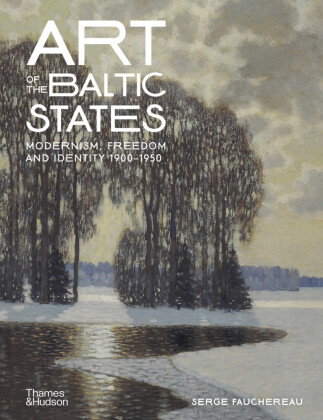
The Baltic States - Lithuania, Latvia and Estonia - retain strong cultural identities that have survived despite centuries of colonization by powerful neighbouring lands. By the late 19th and early 20th centuries, artists and writers were starting to reclaim and promote their own artistic heritage as radically distinct from that of the invading nations, with pioneers such as M. K. Ciurlionis and Vilhelms Purvitis demonstrating rare originality in their work. In the wake of the First World War, the three Baltic countries regained their autonomy, and the 1920s and 30s became a rich period of openness and international artistic exchange. Modernism in all its forms flourished, not only in painting but in sculpture, printmaking, photomontage and the decorative arts, ranging from the elegant abstraction of Arnold Akberg to the provocative figuration of Karlis Padegs and the experimental photography of Domicele Tarabildiene.
Art of the Baltic States is organized into three main chapters, documenting the history of art in each country. Enriched with illustrations from important museum collections, Fauchereau covers key art movements as well as their complex historical background, from time under the Czars and the German crown to the invasion by the Soviet Union and beyond. With each country showcased in its own lavishly illustrated section, this is a wonderful guide to a vibrant field in European art history that is often overlooked but deserves rediscovery and a place on the global stage.