






Diese Website verwendet Cookies und ähnliche Technologien. Dabei handelt es sich um kleine Textdateien, die auf eurem Computer gespeichert und ausgelesen werden. Indem ihr auf "Alles akzeptieren" klickt, stimmt ihr der Verarbeitung von Daten, der Erstellung und Verarbeitung von individuellen Nutzungsprofilen über Websites und über Partner und Geräte hinweg sowie der Übermittlung eurer Daten an Drittanbieter zu, die eure Daten teilweise in Ländern außerhalb der Europäischen Union verarbeiten (GDPR Art. 49). Einzelheiten hierzu findet ihr in den Datenschutzhinweisen. Die Daten werden für Analysen und für eigene Zwecke Dritter verwendet. Weitere Informationen, auch über die Datenverarbeitung durch Drittanbieter und die Möglichkeit des Widerrufs, findet ihr in den Einstellungen und in unseren Datenschutzhinweisen. Hier könnt ihr mit den notwendigen Tools fortfahren.
- Verlag: Springer, Berlin
- Autor: John F. May
- Artikel-Nr.: KNV95607890
- ISBN: 9783031019982
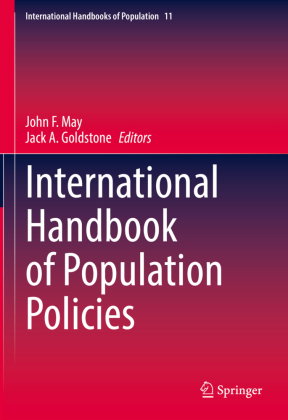
This Handbook offers an array of internationally recognized experts' essays that provide a current and comprehensive examination of all dimensions of international population policies. The book examines the theoretical foundations, the historical and empirical evidence for policy formation, the policy levers and modelling, as well as the new policy challenges. The section Theoretical Foundations reviews population issues today, population theories, the population policies' framework as well as the linkages between population, development, health, food systems, and the environment. The next section Empirical Evidence discusses international approaches to design and implement population policies on a regional level. The section Policy Levers and Modelling reviews the tools and the policy levers that are available to design, implement, monitor, and measure the impact of population policies. Finally, the section New Policy Challenges examines the recurrent and emerging issues in population policies. This section also discusses prospects for demographic sustainability as well as future considerations for population policies. As such this Handbook provides an important and structured examination of contemporary population policies, their evolution, and their prospects.