






Diese Website verwendet Cookies und ähnliche Technologien. Dabei handelt es sich um kleine Textdateien, die auf eurem Computer gespeichert und ausgelesen werden. Indem ihr auf "Alles akzeptieren" klickt, stimmt ihr der Verarbeitung von Daten, der Erstellung und Verarbeitung von individuellen Nutzungsprofilen über Websites und über Partner und Geräte hinweg sowie der Übermittlung eurer Daten an Drittanbieter zu, die eure Daten teilweise in Ländern außerhalb der Europäischen Union verarbeiten (GDPR Art. 49). Einzelheiten hierzu findet ihr in den Datenschutzhinweisen. Die Daten werden für Analysen und für eigene Zwecke Dritter verwendet. Weitere Informationen, auch über die Datenverarbeitung durch Drittanbieter und die Möglichkeit des Widerrufs, findet ihr in den Einstellungen und in unseren Datenschutzhinweisen. Hier könnt ihr mit den notwendigen Tools fortfahren.
- Verlag: Springer, Berlin
- Autor: Manuel Enrique Pardo Echarte
- Artikel-Nr.: KNV95660234
- ISBN: 9783030678005
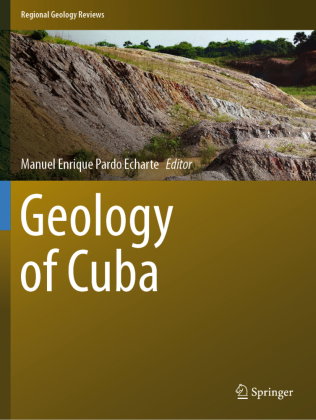
The evolution of geological cartography in Cuba in its more than 135 years of history has been possible through the consultation of numerous archival reports, publications, maps and personal interviews with different authors and geologists of vast experience. A brief critical analysis is made of the increase in the degree of geological knowledge of the country since the elaboration of the Geological Sketch of the Cuban Island at a scale of 1: 2 000 000 (Fernández de Castro, 1883), first of Cuba and of Ibero-America, until the most recent Digital Geological Map of Cuba at scale 1: 100 000 (Pérez Aragón, 2016). Cuba and its surroundings are a geological mosaic in the southeast corner of the North American plate with rocks from many different origins, from Proterozoic to Quaternary, extended along the southern border of the plate. From the Eocene, this belt has been dissected by several great faults, related to the development of some great oceanic depressions (Cayman trough and Yucatan basin). The fossil record of Cuba, which covers approximately the last 200 million years of life on Earth, is rich in very varied fossils, witnessing a wide diversity of organisms, both animals and plants, that inhabited the Antillean and Caribbean region; and that constitute the inheritance of the biological diversity that the current Cuban archipelago exhibits. As a result of the preparation of the Cuban Metallogenic Map at scale 1: 250 000, forty-one models and eight sub-models of metallic mineral deposits were identified. These models, of descriptive-genetic type, together with the analysis of their spatial distribution and their relationship with geology, allowed the identification and mapping of ten mineral systems, linked to the geodynamic environments present in the Cuban territory. Cuba has large deposits of limestone, loam, dolomite, kaolin, gypsum and anhydrite, rock salt, marbles, sands and clays of different types, zeolites, peat, therapeutic peloids and many more. Thereare manifestations of decorative and precious rocks such as jasper, jadeite, different varieties of quartz and even xylopals. A compilation of geochemical data of oceanic basalt samples from previous works, together with data of analyzed samples during this study in order to discuss geochemical criteria based on immobile element (proxies for fractionation indices, alkalinity, mantle ow and subduction addition), provide a comprehensive ophiolite classification according to their tectonic setting. This book addresses different facets of the geological knowledge of Cuba: history of its cartography, marine geology, fossil record, stratigraphy, tectonics, classification of its ophiolites, quaternary deposits, metallogeny and minerageny.