






Diese Website verwendet Cookies und ähnliche Technologien. Dabei handelt es sich um kleine Textdateien, die auf eurem Computer gespeichert und ausgelesen werden. Indem ihr auf "Alles akzeptieren" klickt, stimmt ihr der Verarbeitung von Daten, der Erstellung und Verarbeitung von individuellen Nutzungsprofilen über Websites und über Partner und Geräte hinweg sowie der Übermittlung eurer Daten an Drittanbieter zu, die eure Daten teilweise in Ländern außerhalb der Europäischen Union verarbeiten (GDPR Art. 49). Einzelheiten hierzu findet ihr in den Datenschutzhinweisen. Die Daten werden für Analysen und für eigene Zwecke Dritter verwendet. Weitere Informationen, auch über die Datenverarbeitung durch Drittanbieter und die Möglichkeit des Widerrufs, findet ihr in den Einstellungen und in unseren Datenschutzhinweisen. Hier könnt ihr mit den notwendigen Tools fortfahren.
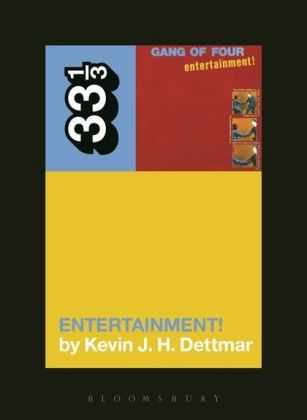
- Verlag: Bloomsbury Academic
- Autor: Kevin J. H. Dettmar
- Artikel-Nr.: KNV43157698
- ISBN: 9781623560652
Following hard on the explosion of British punk, in 1979 Gang of Four produced post-punk's smartest record, Entertainment! For the first time, a band wedded punk's angry energy to funk's propulsive beats-and used that music to put across lyrics that brought a heady mixture of Marxist theory and situationism to exposing the cultural politics of everyday life.
But for an American college student from the suburbs-and, one expects, for many, many others, including British youth-Jon King's and Andy Gill's mumbled lyrics were often all but unintelligible. Political rock 'n' roll is always something of an oxymoron: rock audiences by and large don't tune in to be lectured to. But what can it mean that a band that made pop songs as political theory actively resisted making that theory legible?
Coming to terms with the impact of Entertainment! requires us to take the mondegreen-the misunderstood lyric-seriously. The old joke has it that the title of R.E.M.'s debut album should have been not Murmur, but Mumble: true, so far as it goes. But that's the title, too, of rock 'n' roll's Greatest Hits compilation-and that strategic inarticulateness itself, which creates such an important role for the listener, has an important politics.