






Diese Website verwendet Cookies und ähnliche Technologien. Dabei handelt es sich um kleine Textdateien, die auf eurem Computer gespeichert und ausgelesen werden. Indem ihr auf "Alles akzeptieren" klickt, stimmt ihr der Verarbeitung von Daten, der Erstellung und Verarbeitung von individuellen Nutzungsprofilen über Websites und über Partner und Geräte hinweg sowie der Übermittlung eurer Daten an Drittanbieter zu, die eure Daten teilweise in Ländern außerhalb der Europäischen Union verarbeiten (GDPR Art. 49). Einzelheiten hierzu findet ihr in den Datenschutzhinweisen. Die Daten werden für Analysen und für eigene Zwecke Dritter verwendet. Weitere Informationen, auch über die Datenverarbeitung durch Drittanbieter und die Möglichkeit des Widerrufs, findet ihr in den Einstellungen und in unseren Datenschutzhinweisen. Hier könnt ihr mit den notwendigen Tools fortfahren.
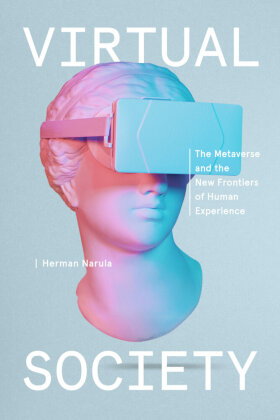
- Verlag: Penguin Random House
- Autor: Herman Narula
- Artikel-Nr.: KNV95990573
- ISBN: 9780593594018
Mind-expanding . . . This important book offers a highly persuasive argument that a new kind of virtual world, the metaverse, marks a profound new stage in this long human quest for fulfillment through creation. Chris Anderson, Head of TED
The concept of the metaverse has exploded in the public consciousness, but its contours remain elusive. Is it merely an immersive virtual reality playground, one that Facebook and other platforms will angle to control? Is it simply the next generation of massive multiplayer online games? Or is it something more revolutionary?
As Herman Narula shows, the metaverse is the latest manifestation of an ancient human tendency: the act of worldbuilding. From the Egyptians, whose conception of death inspired them to build the pyramids, to modern-day sports fans, whose passion for a game inspires extreme behavior, humans have long sought to supplement their day-to-day lives with a rich diversity of alternative experiences.
Rooting his vision in history and psychology, Narula argues that humans intrinsic need for autonomy, accomplishment, and connection can best be met in virtual worlds of ideas, where users have the chance to create and exchange meaning and value. The metaverse is both the growing set of fulfilling digital experiences ranging from advanced gaming to concerts and other entertainment events and even to virtual employment and the empowering framework that allows these spaces to become networks of useful meaning.
Bloomberg Intelligence recently predicted that the metaverse will become an $800 billon industry by 2024. But its implications, argues Narula, are far more awe-inspiring than as a spigot of cash. The arrival of the metaverse marks the beginning of a new age of exploration not outward, but inward with the potential to reshape society and open the door to a new understanding of the human species and its capabilities.
Rigorously researched and passionately argued, Virtual Society will be a provocative and essential guide for anyone who wants to go beyond superficial headlines to understand the true contours and potential of our virtual future.