






Diese Website verwendet Cookies und ähnliche Technologien. Dabei handelt es sich um kleine Textdateien, die auf eurem Computer gespeichert und ausgelesen werden. Indem ihr auf "Alles akzeptieren" klickt, stimmt ihr der Verarbeitung von Daten, der Erstellung und Verarbeitung von individuellen Nutzungsprofilen über Websites und über Partner und Geräte hinweg sowie der Übermittlung eurer Daten an Drittanbieter zu, die eure Daten teilweise in Ländern außerhalb der Europäischen Union verarbeiten (GDPR Art. 49). Einzelheiten hierzu findet ihr in den Datenschutzhinweisen. Die Daten werden für Analysen und für eigene Zwecke Dritter verwendet. Weitere Informationen, auch über die Datenverarbeitung durch Drittanbieter und die Möglichkeit des Widerrufs, findet ihr in den Einstellungen und in unseren Datenschutzhinweisen. Hier könnt ihr mit den notwendigen Tools fortfahren.
- Verlag: Springer, Berlin
- Autor: Julian Nida-Rümelin
- Artikel-Nr.: KNV96009719
- ISBN: 9783031124815
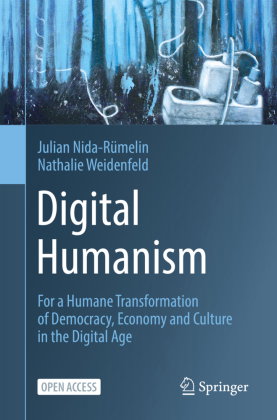
This open access book deals with cultural and philosophical aspects of artificial intelligence (AI) and pleads for a "digital humanism". This term is beginning to be en vogue everywhere. Due to a growing discontentment with the way digitalization is being used in the world, particularly formulated by former heroes of Internet, social media and search engine companies, philosophical as well as industrial thought leaders begin to plead for a humane use of digital tools. Yet the term "digital humanism" is a particular terminology that lacks a sound conceptual and philosophical basis and needs clarification still - and this gap is exactly filled by this book. It propagates a vision of society in which digitization is used to strengthen human self-determination, autonomy and dignity and whose time has come to be propagated throughout the world.
The advantage of this book is that it is philosophically sound and yet written in a way that will make it accessible for everybody interested in the subject. Every chapters begins with a film scene illustrating a precise philosophical problem with AI and how we look at it - making the book not only readable, but even entertaining. And after having read the book the reader will have a clear vision of what it means to live in a world where digitization and AI are central technologies for a better and more humane civilization.