






Diese Website verwendet Cookies und ähnliche Technologien. Dabei handelt es sich um kleine Textdateien, die auf eurem Computer gespeichert und ausgelesen werden. Indem ihr auf "Alles akzeptieren" klickt, stimmt ihr der Verarbeitung von Daten, der Erstellung und Verarbeitung von individuellen Nutzungsprofilen über Websites und über Partner und Geräte hinweg sowie der Übermittlung eurer Daten an Drittanbieter zu, die eure Daten teilweise in Ländern außerhalb der Europäischen Union verarbeiten (GDPR Art. 49). Einzelheiten hierzu findet ihr in den Datenschutzhinweisen. Die Daten werden für Analysen und für eigene Zwecke Dritter verwendet. Weitere Informationen, auch über die Datenverarbeitung durch Drittanbieter und die Möglichkeit des Widerrufs, findet ihr in den Einstellungen und in unseren Datenschutzhinweisen. Hier könnt ihr mit den notwendigen Tools fortfahren.
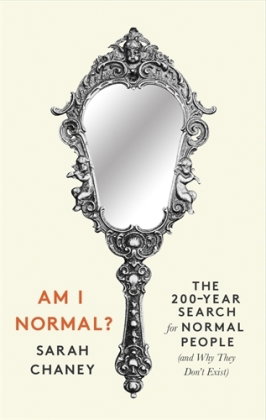
- Verlag: Profile Books
- Autor: Sarah Chaney
- Artikel-Nr.: KNV96026514
- ISBN: 9781788162456
*A Waterstones Best Popular Science Book of 2022*
*A Telegraph Best Book for Summer 2022*
*As heard on BBC Radio 4 Woman's Hour*
'Excellent ... one of those rare pop-science books that make you look at the whole world differently' The Daily Telegraph *****
'Riveting' Mail on Sunday *****
'Captivating' Guardian, Book of the Day
'Compelling' Observer
Before the nineteenth century, the term normal was rarely ever associated with human behaviour. Normal was a term used in maths: people weren't normal - triangles were.
But from the 1830s, this branch of science really took off across Europe and North America, with a proliferation of IQ tests, sex studies, a census of hallucinations - even a UK beauty map (which concluded the women in Aberdeen were "the most repellent"). This book tells the surprising history how the very notion of the normal came about, how it shaped us all, often while entrenching oppressive values.
Sarah Chaney looks at why we're still asking the internet: Do I have a normal body? Is my sex life normal? Are my kids normal? And along the way, she challenges why we ever thought it might be a desirable thing to be.