






Diese Website verwendet Cookies und ähnliche Technologien. Dabei handelt es sich um kleine Textdateien, die auf eurem Computer gespeichert und ausgelesen werden. Indem ihr auf "Alles akzeptieren" klickt, stimmt ihr der Verarbeitung von Daten, der Erstellung und Verarbeitung von individuellen Nutzungsprofilen über Websites und über Partner und Geräte hinweg sowie der Übermittlung eurer Daten an Drittanbieter zu, die eure Daten teilweise in Ländern außerhalb der Europäischen Union verarbeiten (GDPR Art. 49). Einzelheiten hierzu findet ihr in den Datenschutzhinweisen. Die Daten werden für Analysen und für eigene Zwecke Dritter verwendet. Weitere Informationen, auch über die Datenverarbeitung durch Drittanbieter und die Möglichkeit des Widerrufs, findet ihr in den Einstellungen und in unseren Datenschutzhinweisen. Hier könnt ihr mit den notwendigen Tools fortfahren.
- Verlag: Springer, Berlin
- Autor: Nick Kanas
- Artikel-Nr.: KNV96058811
- ISBN: 9783031167225
This book is a winner of International Academy of Astronautics 2023 Life Science Book Award.
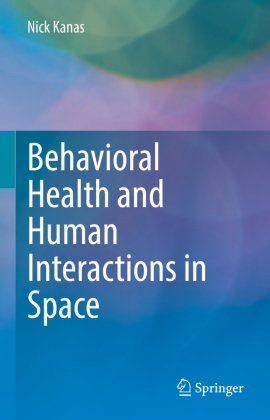
This textbook covers the range of psychological and interpersonal issues that can affect astronauts living and working in space. It deals with the three major risk areas cited by NASA's Behavioral Health and Performance Element: Behavioral Medicine, Team Risk, and Sleep Risk.
Based on the author's more than 50 years of experience in space-related activities writing, conducting research, and teaching undergraduate and graduate courses, the book follows a comprehensive range of topics that include: cognitive effects; psychiatric issues; cultural influences; salutogenic and positive aspects of space travel; autonomy and delayed communication; current plans to return to the Moon and Mars; analysis of study environments such as the polar regions, submersible habitats, and space simulation facilities; and more. It draws on research, literature, and case studies from the 1950s onward, showing readers in a natural and accessible way how the field has progressed over time.
The book contains ample end-of-chapter summaries and exercises as well as a complete glossary of key terms. As such, it will serve students taking courses in aerospace psychology, psychiatry, sociology, human factors, medicine, and related social sciences, in addition to space industry professionals and others interested in the complexities of people living and working in space.