






Diese Website verwendet Cookies und ähnliche Technologien. Dabei handelt es sich um kleine Textdateien, die auf eurem Computer gespeichert und ausgelesen werden. Indem ihr auf "Alles akzeptieren" klickt, stimmt ihr der Verarbeitung von Daten, der Erstellung und Verarbeitung von individuellen Nutzungsprofilen über Websites und über Partner und Geräte hinweg sowie der Übermittlung eurer Daten an Drittanbieter zu, die eure Daten teilweise in Ländern außerhalb der Europäischen Union verarbeiten (GDPR Art. 49). Einzelheiten hierzu findet ihr in den Datenschutzhinweisen. Die Daten werden für Analysen und für eigene Zwecke Dritter verwendet. Weitere Informationen, auch über die Datenverarbeitung durch Drittanbieter und die Möglichkeit des Widerrufs, findet ihr in den Einstellungen und in unseren Datenschutzhinweisen. Hier könnt ihr mit den notwendigen Tools fortfahren.
- Verlag: Hatje Cantz Verlag
- Autor: Susan Davidson
- Artikel-Nr.: KNV96096109
- ISBN: 9783775754385
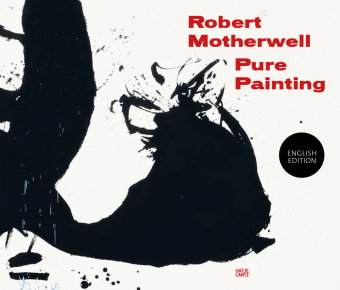
An intensely intellectual painter, Robert Motherwell is renowned for his distinctive Abstract Expressionist style. The seminal artist permeated his gestural works with an expressionism and austerity reflective of the human psyche; at the same time his oeuvre addressed political and humanitarian themes.Robert Motherwell: Pure Painting is an in-depth exploration of his artistic practice. Leading art scholars examine the American artist's turn from Surrealism to abstraction and analyze the major series that developed over his fifty-year career. The catalogue studies the dialogue between Motherwell's art and the nineteenth-century French painting tradition, investigates his relationship to Spanish techniques and processes, with an emphasis on their underlying political significance, and delves into Motherwell's use of ochre pigment, with its evocation of both deep geological time and avant-garde practices.
In 1940s New York City ROBERT MOTHERWELL (*1915, Aberdeen, WA-1991, Provincetown, MA) entered a milieu of artists whose radical new style of painting came to be known as Abstract Expressionism. A theorist of this informal group - including artists such as Mark Rothko, Jackson Pollock, and Willem de Kooning - he taught throughout his life.