






Diese Website verwendet Cookies und ähnliche Technologien. Dabei handelt es sich um kleine Textdateien, die auf eurem Computer gespeichert und ausgelesen werden. Indem ihr auf "Alles akzeptieren" klickt, stimmt ihr der Verarbeitung von Daten, der Erstellung und Verarbeitung von individuellen Nutzungsprofilen über Websites und über Partner und Geräte hinweg sowie der Übermittlung eurer Daten an Drittanbieter zu, die eure Daten teilweise in Ländern außerhalb der Europäischen Union verarbeiten (GDPR Art. 49). Einzelheiten hierzu findet ihr in den Datenschutzhinweisen. Die Daten werden für Analysen und für eigene Zwecke Dritter verwendet. Weitere Informationen, auch über die Datenverarbeitung durch Drittanbieter und die Möglichkeit des Widerrufs, findet ihr in den Einstellungen und in unseren Datenschutzhinweisen. Hier könnt ihr mit den notwendigen Tools fortfahren.
- Verlag: Thames & Hudson
- Autor: Snap Editions
- Artikel-Nr.: KNV96125357
- ISBN: 9788857245645
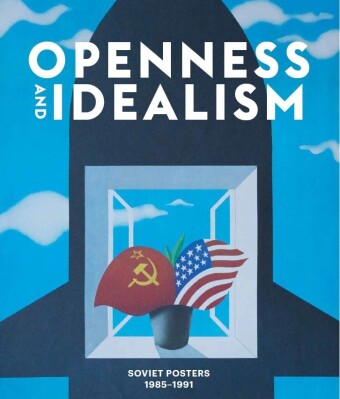
Confronted with a failing economy and the twilight of the Communist mode of governance, General Secretary Mikhail Gorbachev rolled back many of the core tenets of the Soviet Union. In this era of Perestroika (Restructuring), the Soviet Union opened itself to foreign investment, inaugurated a process of decentralization, promised transparency, and accepted previously prohibited critiques of the government. The second development, Glasnost (Openness), brought with it artistic alternatives to the state-endorsed Social Realism, with posters becoming vehicles for confronting the history of the USSR from the vantage of its impending dissolution. As a result, Glasnost became a movement that began a new chapter in the visual culture of Russia that preserved the fiery polemics of resistance and socialist ideology.
The book will feature approx. 212 reproductions of posters from the Martha H. and J. Speed Carroll Collection, and will comprise insightful essays from Russian history scholar Andy Willimott and art historian Pepe Karmel, with an introduction from J. Speed Carroll. Additionally, three interviews with Russian artists who produced some of the posters during this time, conducted by Russian translator Bela Shayevich, will be included.