






Diese Website verwendet Cookies und ähnliche Technologien. Dabei handelt es sich um kleine Textdateien, die auf eurem Computer gespeichert und ausgelesen werden. Indem ihr auf "Alles akzeptieren" klickt, stimmt ihr der Verarbeitung von Daten, der Erstellung und Verarbeitung von individuellen Nutzungsprofilen über Websites und über Partner und Geräte hinweg sowie der Übermittlung eurer Daten an Drittanbieter zu, die eure Daten teilweise in Ländern außerhalb der Europäischen Union verarbeiten (GDPR Art. 49). Einzelheiten hierzu findet ihr in den Datenschutzhinweisen. Die Daten werden für Analysen und für eigene Zwecke Dritter verwendet. Weitere Informationen, auch über die Datenverarbeitung durch Drittanbieter und die Möglichkeit des Widerrufs, findet ihr in den Einstellungen und in unseren Datenschutzhinweisen. Hier könnt ihr mit den notwendigen Tools fortfahren.
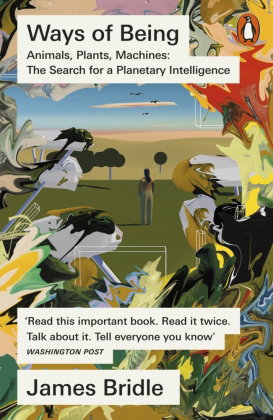
- Verlag: Penguin Books UK
- Autor: James Bridle
- Artikel-Nr.: KNV96140689
- ISBN: 9780141994260
'Heady, exhilarating, often astonishing' New York Times
'Iridescently original, deeply disorientating and yet somehow radically hopeful ... worth reading and rereading' Brian Eno
'Be prepared to re-evaluate your relationship with the amazing life forms with whom we share the planet. Fascinating, innovative and thought provoking: I thoroughly recommend Ways of Being' Dr Jane Goodall, DBE
Recent years have seen rapid advances in 'artificial' intelligence, which increasingly appears to be something stranger than we ever imagined. At the same time, we are becoming more aware of the other intelligences which have been with us all along, unrecognized. These other beings are the animals, plants, and natural systems that surround us, and are slowly revealing their complexity and knowledge - just as the new technologies we've built are threatening to cause their extinction, and ours.
In Ways of Being, writer and artist James Bridle considers the fascinating, uncanny and multiple ways of existing on earth. What can we learn from these other forms of intelligence and personhood, and how can we change our societies to live more equitably with one another and the non-human world? From Greek oracles to octopuses, forests to satellites, Bridle tells a radical new story about ecology, technology and intelligence. We must, they argue, expand our definition of these terms to build a meaningful and free relationship with the non-human, one based on solidarity and cognitive diversity. We have so much to learn, and many worlds to gain.