






Diese Website verwendet Cookies und ähnliche Technologien. Dabei handelt es sich um kleine Textdateien, die auf eurem Computer gespeichert und ausgelesen werden. Indem ihr auf "Alles akzeptieren" klickt, stimmt ihr der Verarbeitung von Daten, der Erstellung und Verarbeitung von individuellen Nutzungsprofilen über Websites und über Partner und Geräte hinweg sowie der Übermittlung eurer Daten an Drittanbieter zu, die eure Daten teilweise in Ländern außerhalb der Europäischen Union verarbeiten (GDPR Art. 49). Einzelheiten hierzu findet ihr in den Datenschutzhinweisen. Die Daten werden für Analysen und für eigene Zwecke Dritter verwendet. Weitere Informationen, auch über die Datenverarbeitung durch Drittanbieter und die Möglichkeit des Widerrufs, findet ihr in den Einstellungen und in unseren Datenschutzhinweisen. Hier könnt ihr mit den notwendigen Tools fortfahren.
- Verlag: Hatje Cantz Verlag
- Autor: Riehen / Basel Ulf Küster für die Fondation Beyeler
- Artikel-Nr.: KNV96148083
- ISBN: 9783775754026
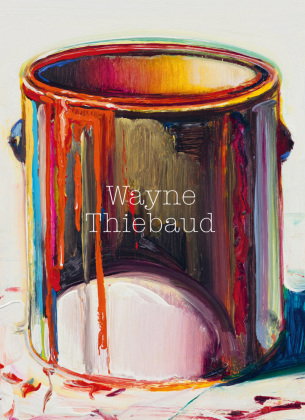
Wayne Thiebaud's famous, literally candy-colored still lifes of pies, cakes, gumball machines, and lipsticks reflect the promise and abundance of the American way of life a society of plenty, where supply exceeds demand.The tactile impression created by his pasty layers of paint brings the objects to life and creates an atmosphere in which irony and melancholy are carefully balanced. Testing the possibilities of painterly expression, Thiebaud's brilliant painting technique explores the boundaries of the real and imagined world. This catalogue presents all aspects of the legendary American artist's oeuvre, including still lifes and portraits, as well as his deserted, multi-perspective cityscapes and river landscapes, in luminous pastels that exude a peculiar summertime sadness.
WAYNE THIEBAUD (1920, Mesa, AZ-2021, Sacramento, CA) began his career as a cartoonist and graphic designer, briefly working for Walt Disney Studios. As an artist, Thiebaud was associated with the US Pop Art movement: his still lifes gained nationwide attention as part of the landmark exhibition New Paintings of Common Objects in 1962, which also featured Andy Warhol, Roy Lichtenstein, and Ed Ruscha and is considered a milestone in the critical reception of Pop Art.