






Diese Website verwendet Cookies und ähnliche Technologien. Dabei handelt es sich um kleine Textdateien, die auf eurem Computer gespeichert und ausgelesen werden. Indem ihr auf "Alles akzeptieren" klickt, stimmt ihr der Verarbeitung von Daten, der Erstellung und Verarbeitung von individuellen Nutzungsprofilen über Websites und über Partner und Geräte hinweg sowie der Übermittlung eurer Daten an Drittanbieter zu, die eure Daten teilweise in Ländern außerhalb der Europäischen Union verarbeiten (GDPR Art. 49). Einzelheiten hierzu findet ihr in den Datenschutzhinweisen. Die Daten werden für Analysen und für eigene Zwecke Dritter verwendet. Weitere Informationen, auch über die Datenverarbeitung durch Drittanbieter und die Möglichkeit des Widerrufs, findet ihr in den Einstellungen und in unseren Datenschutzhinweisen. Hier könnt ihr mit den notwendigen Tools fortfahren.
- Verlag: Springer, Berlin
- Autor: William N. Brown
- Artikel-Nr.: KNV96157476
- ISBN: 9789811980350
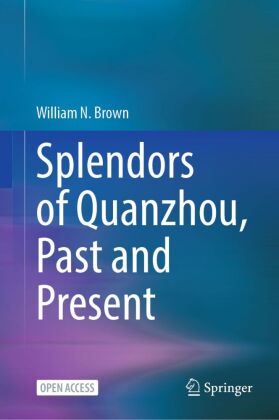
This open access book explores the past and present of Quanzhou (Zayton) and the rich diversity and tolerance that kindled Quanzhou's innovativeness and helped it prosper both commercially and culturally-values that are today being embraced by China's global trade partners.
Quanzhou (Zayton), Marco Polo's port of departure and Columbus' goal in China, was not only the start of the Maritime Silk Road and the Middle Age's greatest port but also centuries ahead of its time in its tolerance and diversity. The fabled "City of Light" had 7 mosques for its 40,000 Muslims, some of whom served in government, as well as 3 Franciscan cathedrals funded in part by the emperor, Jewish synagogues, and centers for Nestorian Christians, Hindus, Taoists, Manicheans, Jains, etc. As Franciscan Bishop Andrew of Perugia wrote in 1322, "Tis a fact that in this vast empire, there are people of every nation under heaven, and every sect, and all and sundry are allowed to live freely according to their creed."
In 2021, UNESCO designated "Quanzhou, Emporium of the World," as a world heritage site, and the city is now the hub of the Belt and Road Initiative, the 21st Century Silk Road, which was inspired by ancient Quanzhou.