






Diese Website verwendet Cookies und ähnliche Technologien. Dabei handelt es sich um kleine Textdateien, die auf eurem Computer gespeichert und ausgelesen werden. Indem ihr auf "Alles akzeptieren" klickt, stimmt ihr der Verarbeitung von Daten, der Erstellung und Verarbeitung von individuellen Nutzungsprofilen über Websites und über Partner und Geräte hinweg sowie der Übermittlung eurer Daten an Drittanbieter zu, die eure Daten teilweise in Ländern außerhalb der Europäischen Union verarbeiten (GDPR Art. 49). Einzelheiten hierzu findet ihr in den Datenschutzhinweisen. Die Daten werden für Analysen und für eigene Zwecke Dritter verwendet. Weitere Informationen, auch über die Datenverarbeitung durch Drittanbieter und die Möglichkeit des Widerrufs, findet ihr in den Einstellungen und in unseren Datenschutzhinweisen. Hier könnt ihr mit den notwendigen Tools fortfahren.
- Verlag: Springer, Berlin
- Autor: Eduardo A. Haddad
- Artikel-Nr.: KNV96185388
- ISBN: 9783031226526
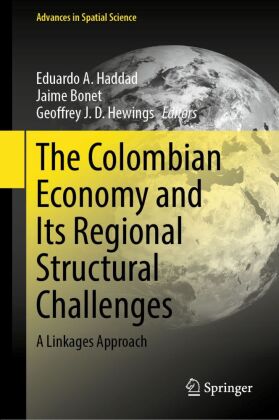
This book examines regional structural challenges on Colombia's path to sustainable social cohesion and regionally inclusive growth. These challenges can be divided into three main groups: (i) those that focus on competitiveness and the supply side, (ii) those that arise from critical business cycle issues on the demand side, and (iii) those concerning environmental sustainability, employment and social inclusion.
The contributions, written by experts on Latin American economics and regional science, apply quantitative simulations based on a unified general equilibrium framework and address a wide range of topics, including: Colombia's competitive integration in global markets, human capital profiles, regional economic disparities and public and private mechanisms of interregional income transfer. The challenges entailed by such high-profile and long-term issues as productivity growth and climate change are also analyzed.
In addition, the book positions Colombia's experiences in an international comparative context. It argues that many other Latin American countries face similar challenges and provide evidence to substantiate this claim. By doing so, it offers valuable policy lessons for Latin American countries with similar difficulties.