






Diese Website verwendet Cookies und ähnliche Technologien. Dabei handelt es sich um kleine Textdateien, die auf eurem Computer gespeichert und ausgelesen werden. Indem ihr auf "Alles akzeptieren" klickt, stimmt ihr der Verarbeitung von Daten, der Erstellung und Verarbeitung von individuellen Nutzungsprofilen über Websites und über Partner und Geräte hinweg sowie der Übermittlung eurer Daten an Drittanbieter zu, die eure Daten teilweise in Ländern außerhalb der Europäischen Union verarbeiten (GDPR Art. 49). Einzelheiten hierzu findet ihr in den Datenschutzhinweisen. Die Daten werden für Analysen und für eigene Zwecke Dritter verwendet. Weitere Informationen, auch über die Datenverarbeitung durch Drittanbieter und die Möglichkeit des Widerrufs, findet ihr in den Einstellungen und in unseren Datenschutzhinweisen. Hier könnt ihr mit den notwendigen Tools fortfahren.
- Verlag: Deutscher Kunstverlag
- Autor: Sandra Braune
- Artikel-Nr.: KNV96200172
- ISBN: 9783422988644
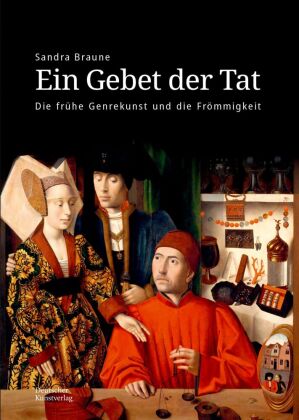
From a modern perspective, the secular and religious spheres separated at the close of the late mediaeval period. This study is the first to make clear, however, that a fundamentally religious atmosphere exerted a decisive influence on the beginnings of genre art in the second half of the 15th century. A new form of piety united everyday life and faith and spiritualised reality. In this sense, early genre paintings could convey Christian doctrinal content and episodes from the story of salvation using typified pictorial figures. This is the case, for example, in Martin Schongauer's Peasant "Family Going to Market" as an updated flight into Egypt, the Wolfegg house book as a practical devotional work, or Peter Christ's "A Goldsmith in his Shop" as a vocational scene, as this monograph demonstrates on the basis of in-depth pictorial analyzes.
- New perspectives on key, early works of genre painting
- The first genre paintings in the context of innermost piety
- Including late mediaeval sermon practice and the doctrine of remembrance