






Diese Website verwendet Cookies und ähnliche Technologien. Dabei handelt es sich um kleine Textdateien, die auf eurem Computer gespeichert und ausgelesen werden. Indem ihr auf "Alles akzeptieren" klickt, stimmt ihr der Verarbeitung von Daten, der Erstellung und Verarbeitung von individuellen Nutzungsprofilen über Websites und über Partner und Geräte hinweg sowie der Übermittlung eurer Daten an Drittanbieter zu, die eure Daten teilweise in Ländern außerhalb der Europäischen Union verarbeiten (GDPR Art. 49). Einzelheiten hierzu findet ihr in den Datenschutzhinweisen. Die Daten werden für Analysen und für eigene Zwecke Dritter verwendet. Weitere Informationen, auch über die Datenverarbeitung durch Drittanbieter und die Möglichkeit des Widerrufs, findet ihr in den Einstellungen und in unseren Datenschutzhinweisen. Hier könnt ihr mit den notwendigen Tools fortfahren.
- Verlag: Penguin Random House
- Autor: Kevin Eikenberry
- Artikel-Nr.: KNV96168629
- ISBN: 9781523003419
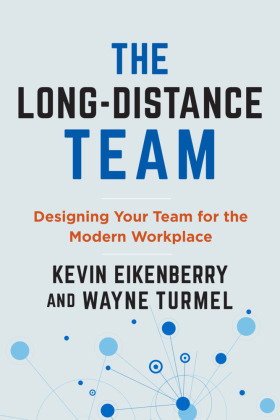
From the experts who brought you The Long-Distance Leader and The Long-Distance Teammate comes the proven and practical guide for leaders to consciously design teams, define and create their desired culture, and encourage and nurture employee engagement all from a distance.
Team design and culture are often presented as separate concepts when they are in fact intertwined in the remote work setting. Using the 3C model of communication, collaboration, and cohesion, leaders will be given the tools to overcome challenges, such as proximity bias and deteriorating social connections, to create an environment where everyone can contribute and add value equally, regardless of location.
The 3Cs are
- Communication While communication is a fundamental part of being human, it is also a critical foundation of successful work. Without it, teams break down.
- Collaboration Remote leaders face the misguided belief that physical presence is required to have a collaborative team. The truth is that proximity has nothing to do with successful collaboration.
- Cohesion This dimension includes decidedly nonstructural aspects, such as relationships, trust, and accountability. While difficult to measure, a team s cohesion is critical to its success.
Using this framework, leaders of all levels will learn to assess, design, and develop their communication channels, methods for remote collaboration, and ability to foster cohesion to build successful long-distance teams. While a hybrid culture will be different, it can, when done right, be better than what existed before.