






Diese Website verwendet Cookies und ähnliche Technologien. Dabei handelt es sich um kleine Textdateien, die auf eurem Computer gespeichert und ausgelesen werden. Indem ihr auf "Alles akzeptieren" klickt, stimmt ihr der Verarbeitung von Daten, der Erstellung und Verarbeitung von individuellen Nutzungsprofilen über Websites und über Partner und Geräte hinweg sowie der Übermittlung eurer Daten an Drittanbieter zu, die eure Daten teilweise in Ländern außerhalb der Europäischen Union verarbeiten (GDPR Art. 49). Einzelheiten hierzu findet ihr in den Datenschutzhinweisen. Die Daten werden für Analysen und für eigene Zwecke Dritter verwendet. Weitere Informationen, auch über die Datenverarbeitung durch Drittanbieter und die Möglichkeit des Widerrufs, findet ihr in den Einstellungen und in unseren Datenschutzhinweisen. Hier könnt ihr mit den notwendigen Tools fortfahren.
- Verlag: Simon & Schuster US
- Autor: Marjorie Ingall
- Artikel-Nr.: KNV96204723
- ISBN: 9781668022641
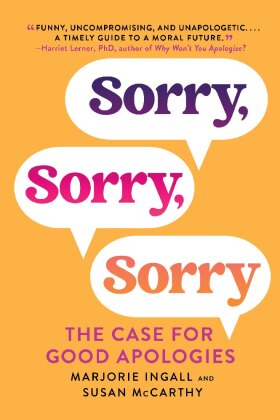
It's a truth universally acknowledged that terrible apologies are the worst. We've all been on the receiving end, and oh, how they make us seethe. Horrible public apologies-excuse-laden, victim blame-y, weaselly statements-often go viral instantaneously, whether they're from a celebrity, a politician, or a blogger. We all recognize bad apologies when we hear them. So why is it so hard to apologize well? How can we do better? How could they do better?
Marjorie Ingall and Susan McCarthy show us the way. Drawing on a deep well of research in psychology, sociology, law, and medicine, they explain why a good apology is hard to find and why it doesn't have to be. Alongside their six (and a half)-step formula for apologizing beautifully, Ingall and McCarthy also delve into how to respond to a bad apology; why corporations, celebrities, and governments seldom apologize well; how to teach children to apologize; how gender and race affect both apologies and forgiveness; and most of all, why good apologies are essential, powerful, and restorative. A good apology can do so many things-mend fences, heal wounds, and bring more harmony into ourselves and our society at large.
With wit, deep introspection, and laugh-out-loud humor, Ingall and McCarthy's guidance will help make the world a better place, one apology at a time.