






Diese Website verwendet Cookies und ähnliche Technologien. Dabei handelt es sich um kleine Textdateien, die auf eurem Computer gespeichert und ausgelesen werden. Indem ihr auf "Alles akzeptieren" klickt, stimmt ihr der Verarbeitung von Daten, der Erstellung und Verarbeitung von individuellen Nutzungsprofilen über Websites und über Partner und Geräte hinweg sowie der Übermittlung eurer Daten an Drittanbieter zu, die eure Daten teilweise in Ländern außerhalb der Europäischen Union verarbeiten (GDPR Art. 49). Einzelheiten hierzu findet ihr in den Datenschutzhinweisen. Die Daten werden für Analysen und für eigene Zwecke Dritter verwendet. Weitere Informationen, auch über die Datenverarbeitung durch Drittanbieter und die Möglichkeit des Widerrufs, findet ihr in den Einstellungen und in unseren Datenschutzhinweisen. Hier könnt ihr mit den notwendigen Tools fortfahren.
- Verlag: Bloomsbury Trade
- Autor: Tom Standage
- Artikel-Nr.: KNV95915231
- ISBN: 9781526608307
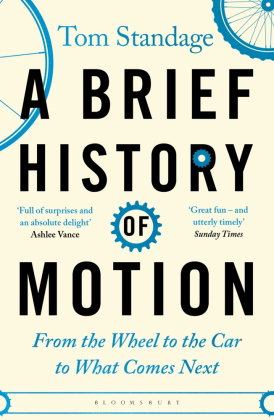
'Speckled with anecdotes, insights and surprises. It is great fun - and utterly timely' Sunday Times
'Standage writes with a masterly clarity' New York Times
'The product of deep research, great intelligence and burnished prose . . . It is rare that I encounter a non-fiction author whose prose is so elegant that it is worth reading for itself. Standage is a writer of this class' Wall Street Journal
Beginning around 3,500 BC with the wheel, and moving through the eras of horsepower, trains and bicycles, Tom Standage puts the rise of the car - and the future of urban transport - into a broader historical context.
Our society has been shaped by the car in innumerable ways, many of which are so familiar that we no longer notice them. Why does red mean stop and green mean go? Why do some countries drive on the left, and some on the right? How did cars, introduced only a little over a century ago, change the way the world was administered, laid out and policed, along with experiences like eating and shopping? And what might travel in a post-car world look like?
As social transformations from ride-sharing to the global pandemic force us to critically re-examine our relationship with personal transportation, A Brief History of Motion is an essential contribution to our understanding of how the modern world came to be.