






Diese Website verwendet Cookies und ähnliche Technologien. Dabei handelt es sich um kleine Textdateien, die auf eurem Computer gespeichert und ausgelesen werden. Indem ihr auf "Alles akzeptieren" klickt, stimmt ihr der Verarbeitung von Daten, der Erstellung und Verarbeitung von individuellen Nutzungsprofilen über Websites und über Partner und Geräte hinweg sowie der Übermittlung eurer Daten an Drittanbieter zu, die eure Daten teilweise in Ländern außerhalb der Europäischen Union verarbeiten (GDPR Art. 49). Einzelheiten hierzu findet ihr in den Datenschutzhinweisen. Die Daten werden für Analysen und für eigene Zwecke Dritter verwendet. Weitere Informationen, auch über die Datenverarbeitung durch Drittanbieter und die Möglichkeit des Widerrufs, findet ihr in den Einstellungen und in unseren Datenschutzhinweisen. Hier könnt ihr mit den notwendigen Tools fortfahren.
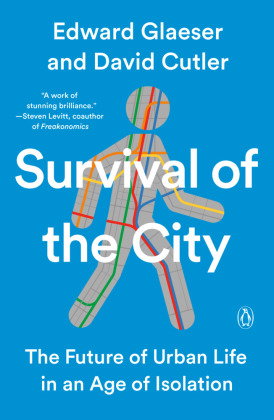
- Verlag: Penguin Random House
- Autor: Edward Glaeser
- Artikel-Nr.: KNV95914999
- ISBN: 9780593297704
One of our great urbanists and one of our great public health experts join forces to reckon with how cities are changing in the face of existential threats the pandemic has only accelerated
Cities can make us sick. That s always been true diseases spread more easily when more people are close to one another. And cities have been demonized as breeding grounds for vice and crime from Sodom and Gomorrah on. But cities have flourished nonetheless because they are humanity s greatest invention, indispensable engines for creativity, innovation, wealth, and civilization itself.
But cities now stand at a crossroads. During the global COVID crisis, cities grew silent; the normal forms of socializing ground to a halt. How permanent are these changes? Advances in technology mean that many people can opt out of city life as never before. Will they? Are we on the brink of a post-urban world?
City life will survive, but individual cities face terrible risks, argue Edward Glaeser and David Cutler, and a wave of urban failure would be absolutely disastrous. In terms of intimacy and inspiration, nothing can replace what cities offer. But great cities have always demanded great management, and our current crisis has exposed fearful gaps in our capacity for good governance. In America, Glaeser and Cutler argue, deep inequities in health care and education are a particular blight on the future of our cities; solving them will be the difference between our collective good health and a downward spiral to a much darker place.