






Diese Website verwendet Cookies und ähnliche Technologien. Dabei handelt es sich um kleine Textdateien, die auf eurem Computer gespeichert und ausgelesen werden. Indem ihr auf "Alles akzeptieren" klickt, stimmt ihr der Verarbeitung von Daten, der Erstellung und Verarbeitung von individuellen Nutzungsprofilen über Websites und über Partner und Geräte hinweg sowie der Übermittlung eurer Daten an Drittanbieter zu, die eure Daten teilweise in Ländern außerhalb der Europäischen Union verarbeiten (GDPR Art. 49). Einzelheiten hierzu findet ihr in den Datenschutzhinweisen. Die Daten werden für Analysen und für eigene Zwecke Dritter verwendet. Weitere Informationen, auch über die Datenverarbeitung durch Drittanbieter und die Möglichkeit des Widerrufs, findet ihr in den Einstellungen und in unseren Datenschutzhinweisen. Hier könnt ihr mit den notwendigen Tools fortfahren.
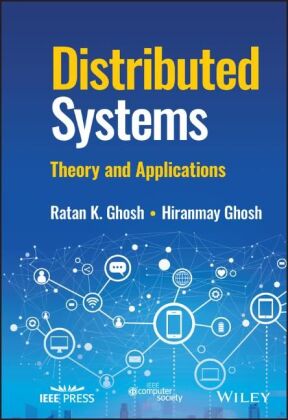
- Verlag: Wiley & Sons
- Autor: Ratan K. Ghosh
- Artikel-Nr.: KNV96256245
- ISBN: 9781119825937
Comprehensive textbook resource on distributed systems--integrates foundational topics with advanced topics of contemporary importance within the field
Distributed Systems: Theory and Applications is organized around three layers of abstractions: networks, middleware tools, and application framework. It presents data consistency models suited for requirements of innovative distributed shared memory applications. The book also focuses on distributed processing of big data, representation of distributed knowledge and management of distributed intelligence via distributed agents. To aid in understanding how these concepts apply to real-world situations, the work presents a case study on building a P2P Integrated E-Learning system. Downloadable lecture slides are included to help professors and instructors convey key concepts to their students.
Additional topics discussed in Distributed Systems: Theory and Applications include:
* Network issues and high-level communication tools
* Software tools for implementations of distributed middleware.
* Data sharing across distributed components through publish and subscribe-based message diffusion, gossip protocol, P2P architecture and distributed shared memory.
* Consensus, distributed coordination, and advanced middleware for building large distributed applications
* Distributed data and knowledge management
* Autonomy in distributed systems, multi-agent architecture
* Trust in distributed systems, distributed ledger, Blockchain and related technologies.
Researchers, industry professionals, and students in the fields of science, technology, and medicine will be able to use Distributed Systems: Theory and Applications as a comprehensive textbook resource for understanding distributed systems, the specifics behind the modern elements which relate to them, and their practical applications.