






Diese Website verwendet Cookies und ähnliche Technologien. Dabei handelt es sich um kleine Textdateien, die auf eurem Computer gespeichert und ausgelesen werden. Indem ihr auf "Alles akzeptieren" klickt, stimmt ihr der Verarbeitung von Daten, der Erstellung und Verarbeitung von individuellen Nutzungsprofilen über Websites und über Partner und Geräte hinweg sowie der Übermittlung eurer Daten an Drittanbieter zu, die eure Daten teilweise in Ländern außerhalb der Europäischen Union verarbeiten (GDPR Art. 49). Einzelheiten hierzu findet ihr in den Datenschutzhinweisen. Die Daten werden für Analysen und für eigene Zwecke Dritter verwendet. Weitere Informationen, auch über die Datenverarbeitung durch Drittanbieter und die Möglichkeit des Widerrufs, findet ihr in den Einstellungen und in unseren Datenschutzhinweisen. Hier könnt ihr mit den notwendigen Tools fortfahren.
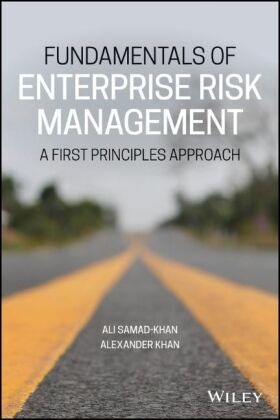
- Verlag: Wiley & Sons
- Autor: Ali Samad-Khan
- Artikel-Nr.: KNV96256224
- ISBN: 9781119755333
There have been many books written on enterprise risk management (ERM) but never one like this. This is the first book that explains comprehensively what risk management means and how to design and implement an ERM program that adds substantial value.
Based on a first principles approach, the book logically and systematically addresses virtually every unanswered question about ERM, including some that have never even been clearly defined. Topics include:
* What is the true meaning of risk?
* Is risk a qualitative concept, a quantitative concept or something else?
* Is risk inherently bad? If so, what is "upside risk" and how can one be risk neutral?
* What is the difference between loss prevention, threat management, tactical risk management and strategic risk management?
* What does it mean to classify risk? Is risk classification necessary for ERM?
* How can one objectively identify a firm's top ten risks?
* What is risk tolerance and how should it be determined?
* What does it mean to quantify risk? Is risk quantification necessary for ERM? If so, is there a simple yet theoretically robust method of quantifying every type of risk across every kind of business? Can risk be quantified where there are little or no empirical loss data? If so, how?
* What are the so-called "black swan" events and why do these supposedly rare events appear to happen so frequently; what issues underly the black swan concept and why are they important to C-level executives?
* Finally, how can one use risk information to make more informed tactical and strategic business decisions, for example, how does one incorporate risk premiums into product prices?
Even though the book tackles many complex problems, it has been written for all audiences--from those who have no prior knowledge of risk management to seasoned risk professionals with years of formal training and experience in this field. All the important terms are clearly defined so that virtually anyone eager to learn the subject matter should be able to follow the discussions with ease. More than just theory, the book includes numerous case studies and practical examples which explain how to address real world risk management business problems. A must-read for anyone interested in learning about ERM from the ground up.