






Diese Website verwendet Cookies und ähnliche Technologien. Dabei handelt es sich um kleine Textdateien, die auf eurem Computer gespeichert und ausgelesen werden. Indem ihr auf "Alles akzeptieren" klickt, stimmt ihr der Verarbeitung von Daten, der Erstellung und Verarbeitung von individuellen Nutzungsprofilen über Websites und über Partner und Geräte hinweg sowie der Übermittlung eurer Daten an Drittanbieter zu, die eure Daten teilweise in Ländern außerhalb der Europäischen Union verarbeiten (GDPR Art. 49). Einzelheiten hierzu findet ihr in den Datenschutzhinweisen. Die Daten werden für Analysen und für eigene Zwecke Dritter verwendet. Weitere Informationen, auch über die Datenverarbeitung durch Drittanbieter und die Möglichkeit des Widerrufs, findet ihr in den Einstellungen und in unseren Datenschutzhinweisen. Hier könnt ihr mit den notwendigen Tools fortfahren.
- Verlag: Springer, Berlin
- Autor: Tomayess Issa
- Artikel-Nr.: KNV96270537
- ISBN: 9781447175155
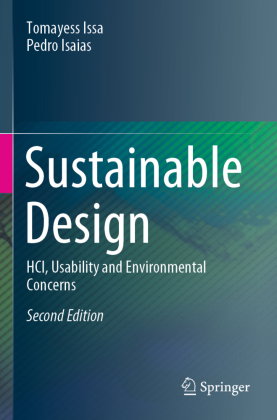
This book is concerned with the importance of Human Computer Interaction (HCI), Usability, user participants, and Sustainability in the Information Communication Technology (ICT) industry throughout the world. ICTs have become a crucial instrument for communication, entertainment, commerce and research and this increased usage is presenting new environmental and sustainability issues as we try and meet the ever-growing needs of both businesses and individuals.
Sustainability and sustainable design must become central to the design of new technologies to make a concerted effort to tackle the environmental concerns we face now and in the future. Development frameworks, tools and models are used and explored, and the New Participative Methodology for Sustainable Design (NPMSD) is introduced as a way of identifying key factors needed in developing more sustainable systems including new smart technology and portable devices.
In this book, the sustainable step in the design stage is evaluated and assessed by 11 countries: namely, Australia, Brazil, China, Germany, India, Norway, Singapore, South Korea, Sweden, UK, and USA. The new results are generated confirming that sustainable design awareness should be considered by designers, and users to minimize and reduce the carbon emissions, raw materials usage, and global warming, since these problems should be tackled soon, otherwise, it will be too late to solve it. Further research is needed in the future to implement and assess the sustainable design step with large IT companies to ensure compliance with environmental standards and rules for sustainable systems.
Sustainable Design is an invaluable resource for students and researchers, designers and business managers who are interested in the human-centered, environmental concerns of sustainable technologies.