






Diese Website verwendet Cookies und ähnliche Technologien. Dabei handelt es sich um kleine Textdateien, die auf eurem Computer gespeichert und ausgelesen werden. Indem ihr auf "Alles akzeptieren" klickt, stimmt ihr der Verarbeitung von Daten, der Erstellung und Verarbeitung von individuellen Nutzungsprofilen über Websites und über Partner und Geräte hinweg sowie der Übermittlung eurer Daten an Drittanbieter zu, die eure Daten teilweise in Ländern außerhalb der Europäischen Union verarbeiten (GDPR Art. 49). Einzelheiten hierzu findet ihr in den Datenschutzhinweisen. Die Daten werden für Analysen und für eigene Zwecke Dritter verwendet. Weitere Informationen, auch über die Datenverarbeitung durch Drittanbieter und die Möglichkeit des Widerrufs, findet ihr in den Einstellungen und in unseren Datenschutzhinweisen. Hier könnt ihr mit den notwendigen Tools fortfahren.
- Verlag: Elsevier Science & Technology
- Autor: M. A. Hayat
- Artikel-Nr.: KNV96376021
- ISBN: 9780128035085
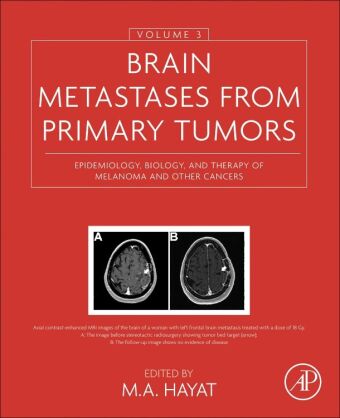
Brain Metastases from Primary Tumors Volume Three: Epidemiology, Biology, and Therapy of Melanoma and Other Cancers provides a comprehensive overview of the metastasis of cancer, the main cause of approximately 90% of cancer associated deaths, yet the mechanisms governing this clinically important process remain poorly understood.
Melanoma is the third most common diagnosis among patients with brain metastases, after lung and breast cancer. Approximately 75% of patients with metastatic melanoma develop brain metastases during the course of their disease. Although tumorigenesis of melanoma remains poorly understood, recent advances in gene expression profiling have revealed molecular mechanisms of this deadly disease. In addition, high-throughput gene expression has many advantages over techniques in cancer transcriptomic studies and has led to the discovery of numerous diagnostic, prognostic, and therapeutic targets, which are also detailed in this book.
The book discusses the link between primary tumors and brain metastasis of melanoma, including molecular mechanisms, treatment options, prognosis, and general applications. Comprehensive chapters discuss systemic therapy, integrin inhibitors, stereotaxic radiosurgery, and more, making this book a great resource for neurooncologists, neurosurgeons, neurologists, and cancer researchers.