






Diese Website verwendet Cookies und ähnliche Technologien. Dabei handelt es sich um kleine Textdateien, die auf eurem Computer gespeichert und ausgelesen werden. Indem ihr auf "Alles akzeptieren" klickt, stimmt ihr der Verarbeitung von Daten, der Erstellung und Verarbeitung von individuellen Nutzungsprofilen über Websites und über Partner und Geräte hinweg sowie der Übermittlung eurer Daten an Drittanbieter zu, die eure Daten teilweise in Ländern außerhalb der Europäischen Union verarbeiten (GDPR Art. 49). Einzelheiten hierzu findet ihr in den Datenschutzhinweisen. Die Daten werden für Analysen und für eigene Zwecke Dritter verwendet. Weitere Informationen, auch über die Datenverarbeitung durch Drittanbieter und die Möglichkeit des Widerrufs, findet ihr in den Einstellungen und in unseren Datenschutzhinweisen. Hier könnt ihr mit den notwendigen Tools fortfahren.
- Verlag: Elsevier Science & Technology
- Autor: Lauren Rogers
- Artikel-Nr.: KNV96377661
- ISBN: 9780081010013
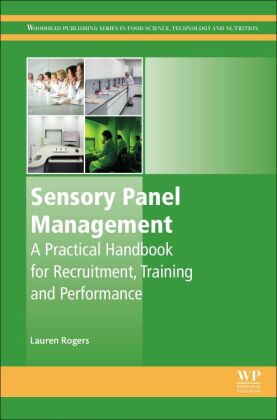
Covering all aspects of sensory panel management, this volume describes the different types of sensory panels (for example panels for quality control, descriptive analysis and discrimination tests), discusses the issues involved with sensory testing, and gives detailed information about sensory panel recruitment, training and on-going management.
Sensory Panel Management gives both theoretical and practical information from deciding what type of panel to recruit and how to conduct panel training, to creating the best sensory team and how to deal with any issues. Downloads of several of the documents included in the book are available from http://www.laurenlrogers.com/sensory-panel-management.html
The book is divided into three main sections. The first section looks at the recruitment of sensory panels, covering the process from both a scientific and a human resources angle. The second section deals with the training of a sensory panel. Initial training, as well as method and product specific training is covered. Example session plans for running panel sessions for quality control, discrimination tests, descriptive profiling, temporal methods and consumer tests are included within the specific chapters. Refresher and advanced training such as training panelists to take part in gas chromatography-olfactometry are also included. The third section examines the performance of sensory panels. Chapters within this section explore performance measures and ways of preventing (and dealing with) difficult situations relating to panellists. A final chapter looks at the future of sensory panels. Throughout the book there are short case study examples demonstrating the practical application of the methods being discussed.
Sensory Panel Management is a key reference for academics, technical and sensory staff in food companies.
Lauren Rogers is an independent sensory science consultant in the UK with more than twenty years of practical experience. She has worked on a wide variety of projects, including shelf life studies, product and flavor optimization, new flavor development and in-depth brand analyses. She is a member of the Society of Sensory Professionals, the Institute of Food Science and Technology's Sensory Science Group, the Sensometric Society and is also a member of the ASTM Sensory Evaluation Committee (E18).