






Diese Website verwendet Cookies und ähnliche Technologien. Dabei handelt es sich um kleine Textdateien, die auf eurem Computer gespeichert und ausgelesen werden. Indem ihr auf "Alles akzeptieren" klickt, stimmt ihr der Verarbeitung von Daten, der Erstellung und Verarbeitung von individuellen Nutzungsprofilen über Websites und über Partner und Geräte hinweg sowie der Übermittlung eurer Daten an Drittanbieter zu, die eure Daten teilweise in Ländern außerhalb der Europäischen Union verarbeiten (GDPR Art. 49). Einzelheiten hierzu findet ihr in den Datenschutzhinweisen. Die Daten werden für Analysen und für eigene Zwecke Dritter verwendet. Weitere Informationen, auch über die Datenverarbeitung durch Drittanbieter und die Möglichkeit des Widerrufs, findet ihr in den Einstellungen und in unseren Datenschutzhinweisen. Hier könnt ihr mit den notwendigen Tools fortfahren.
- Verlag: Elsevier Science & Technology
- Autor: Azamal Husen
- Artikel-Nr.: KNV96381927
- ISBN: 9780323906364
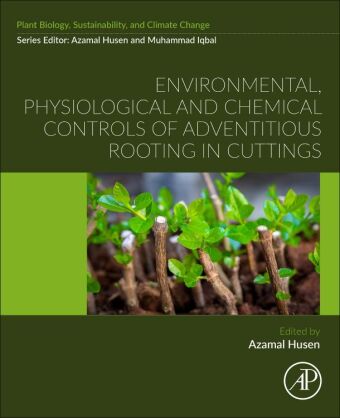
Environmental, Physiological and Chemical Controls of Adventitious Rooting in Cuttings provides a review of the environmental, physiological and chemical controls of adventitious rooting in cuttings obtained from plants. In plants, adventitious roots, which are highly useful for vegetative propagation (or clonal propagation) are produced mainly from leaves, hypocotyls, stems or shoots. Vegetative propagation may occur naturally by using propagules such as roots, underground and aerial stems, leaves, buds and bulbils. It may also be done artificially through regenerative organs (rhizomes, bulbs, and corms) and by utilizing specialized methods, like cutting, grafting and layering. This book covers the latest tactics surrounding these processes.
As a plethora of factors affect the adventitious rooting of cuttings, adding to the complexity of the phenomenon. The main factors which control adventitious root formation are types of cuttings, presence of leaf area on cuttings, types of hormones and their concentration, duration of hormonal treatment (quick dip, long soak, dry dip, spray dip, or total immerse method), maturation (juvenile or mature), genotype, explant position, and more, all of which are discussed here.