






Diese Website verwendet Cookies und ähnliche Technologien. Dabei handelt es sich um kleine Textdateien, die auf eurem Computer gespeichert und ausgelesen werden. Indem ihr auf "Alles akzeptieren" klickt, stimmt ihr der Verarbeitung von Daten, der Erstellung und Verarbeitung von individuellen Nutzungsprofilen über Websites und über Partner und Geräte hinweg sowie der Übermittlung eurer Daten an Drittanbieter zu, die eure Daten teilweise in Ländern außerhalb der Europäischen Union verarbeiten (GDPR Art. 49). Einzelheiten hierzu findet ihr in den Datenschutzhinweisen. Die Daten werden für Analysen und für eigene Zwecke Dritter verwendet. Weitere Informationen, auch über die Datenverarbeitung durch Drittanbieter und die Möglichkeit des Widerrufs, findet ihr in den Einstellungen und in unseren Datenschutzhinweisen. Hier könnt ihr mit den notwendigen Tools fortfahren.
- Verlag: Springer, Berlin
- Autor: Archana Sharma
- Artikel-Nr.: KNV96409884
- ISBN: 9783030872878
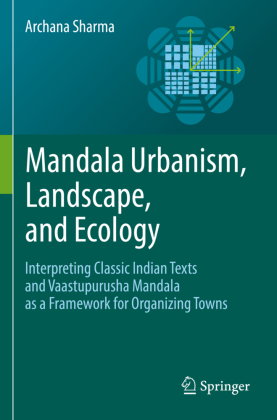
Classic Indian texts and Vaastupurusha Mandala are not often discussed in the western discourse on urbanism, even while much of these predate the commonly taught European writings. This book sheds light on some of those forgotten concepts, thus making the lesser discussed classic Indian town organization ideas accessible to architecture, landscape, and urban planning students worldwide. The resonance of these concepts in present times are reviewed through case studies of select Hindu temple towns in India. Furthermore, the author underscores the formal abstraction of the classic Indian Mandala and transplants the discourse from sociology to socio-ecologically adept trans-disciplinary design thinking. The creative interpretations offer a premise to start revising classic models for current practice to influence the urbanism and ecology of a place in accordance with the changing climate.