






Diese Website verwendet Cookies und ähnliche Technologien. Dabei handelt es sich um kleine Textdateien, die auf eurem Computer gespeichert und ausgelesen werden. Indem ihr auf "Alles akzeptieren" klickt, stimmt ihr der Verarbeitung von Daten, der Erstellung und Verarbeitung von individuellen Nutzungsprofilen über Websites und über Partner und Geräte hinweg sowie der Übermittlung eurer Daten an Drittanbieter zu, die eure Daten teilweise in Ländern außerhalb der Europäischen Union verarbeiten (GDPR Art. 49). Einzelheiten hierzu findet ihr in den Datenschutzhinweisen. Die Daten werden für Analysen und für eigene Zwecke Dritter verwendet. Weitere Informationen, auch über die Datenverarbeitung durch Drittanbieter und die Möglichkeit des Widerrufs, findet ihr in den Einstellungen und in unseren Datenschutzhinweisen. Hier könnt ihr mit den notwendigen Tools fortfahren.
- Verlag: Taylor & Francis
- Autor: Eric Christian Bruun
- Artikel-Nr.: KNV96361803
- ISBN: 9781032157979
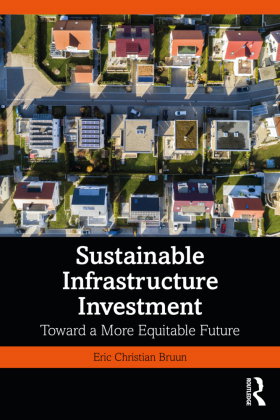
This book provides examples and suggestions for readers to understand how public investment decisions for sustainable infrastructure are made. Through detailed analysis of public investment in infrastructure over the last few decades in the United States, the United Kingdom, and Finland, the author explores how the decision-making processes for major public works spending, many of them requiring quite rigorous and detailed computational methodologies, can result in plans that underserve large portions of the population, are inequitable, and fail to efficiently preserve public property. Beginning with some of the commonly offered explanations for the slow pace of investment and repair in a supposedly prosperous society facing serious environmental challenges, the book then explores media's role in shaping the public-at-large's understanding of the situation and the unimaginative solutions put forward by politicians. It continues with some case studies of infrastructure investment, or lack thereof, including an exploration of competing uses for government funds. It concludes with some suggestions. It is aimed at a large readership of professionals, students, and policy makers in political science, urban planning, and civil engineering.