






Diese Website verwendet Cookies und ähnliche Technologien. Dabei handelt es sich um kleine Textdateien, die auf eurem Computer gespeichert und ausgelesen werden. Indem ihr auf "Alles akzeptieren" klickt, stimmt ihr der Verarbeitung von Daten, der Erstellung und Verarbeitung von individuellen Nutzungsprofilen über Websites und über Partner und Geräte hinweg sowie der Übermittlung eurer Daten an Drittanbieter zu, die eure Daten teilweise in Ländern außerhalb der Europäischen Union verarbeiten (GDPR Art. 49). Einzelheiten hierzu findet ihr in den Datenschutzhinweisen. Die Daten werden für Analysen und für eigene Zwecke Dritter verwendet. Weitere Informationen, auch über die Datenverarbeitung durch Drittanbieter und die Möglichkeit des Widerrufs, findet ihr in den Einstellungen und in unseren Datenschutzhinweisen. Hier könnt ihr mit den notwendigen Tools fortfahren.
- Verlag: Taylor & Francis
- Autor: C.M. Melenovsky
- Artikel-Nr.: KNV96361621
- ISBN: 9780367407674
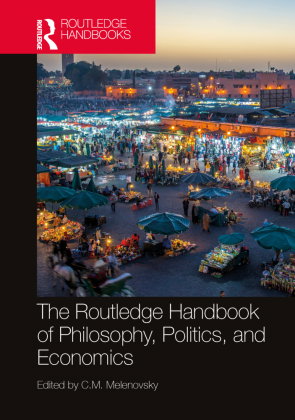
This handbook advances the interdisciplinary field of Philosophy, Politics, and Economics (PPE) by identifying thirty-five topics of ongoing research. Instead of focusing on historically significant texts, it features experts talking about current debates. Individually, each chapter provides a resource for new research. Together, the chapters provide a thorough introduction to contemporary work in PPE, which makes it an ideal reader for a senior-year course.
The handbook is organized into seven parts, each with its own introduction and five chapters:
I. Frameworks
II. Decision-Making
III. Social Structures
IV. Markets
V. Economic Systems
VI. Distributive Justice
VII. Democracy
The "Frameworks" part discusses common tools and perspectives in PPE, and the "Decision-making" section shows different approaches to the study of choice. From there, parts on "Social Structures," "Markets" and "Economic Systems" each use tools from the three PPE disciplines to study and distinguish parts of society. The next part explains dominant theories and challenges to the paradigm of "Distributive Justice." Finally, a part on "Democracy" offers five challenges to current democratic practice.