






Diese Website verwendet Cookies und ähnliche Technologien. Dabei handelt es sich um kleine Textdateien, die auf eurem Computer gespeichert und ausgelesen werden. Indem ihr auf "Alles akzeptieren" klickt, stimmt ihr der Verarbeitung von Daten, der Erstellung und Verarbeitung von individuellen Nutzungsprofilen über Websites und über Partner und Geräte hinweg sowie der Übermittlung eurer Daten an Drittanbieter zu, die eure Daten teilweise in Ländern außerhalb der Europäischen Union verarbeiten (GDPR Art. 49). Einzelheiten hierzu findet ihr in den Datenschutzhinweisen. Die Daten werden für Analysen und für eigene Zwecke Dritter verwendet. Weitere Informationen, auch über die Datenverarbeitung durch Drittanbieter und die Möglichkeit des Widerrufs, findet ihr in den Einstellungen und in unseren Datenschutzhinweisen. Hier könnt ihr mit den notwendigen Tools fortfahren.
- Verlag: Taylor & Francis
- Autor: Tamar Mayer
- Artikel-Nr.: KNV96361920
- ISBN: 9780367506155
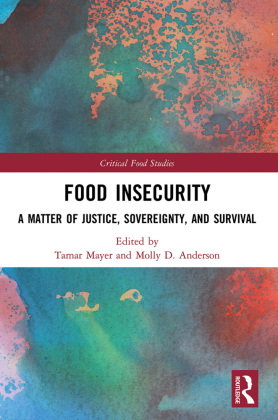
This book explores the experiences, causes, and consequences of food insecurity in different geographical regions and historical eras. It highlights collective and political actions aimed at food sovereignty as solutions to mitigate suffering.
Despite global efforts to end hunger, it persists and has even increased in some regions. This book provides interdisciplinary and historical perspectives on the manifestations of food insecurity, with case studies illustrating how people coped with violations of their rights during the war-time deprivation in France; the neoliberal incursions on food supply in Turkey, Greece, and Nicaragua; as well as the consequences of radioactive contamination of farmland in Japan. This edited collection adopts an analytical approach to understanding food insecurity by examining how the historical and political situations in different countries have resulted in an unfolding dialectic of food insecurity and resistance, with the most marginalized people-immigrants, those in refugee camps, poor peasants, and so forth-consistently suffering the worst effects, yet still maintaining agency to fight back.
The book tackles food insecurity on a local as well as a global scale and will thus be useful for a broad range of audiences, including students, scholars, and the general public interested in studying food crises, globalization, and current global issues.