






Diese Website verwendet Cookies und ähnliche Technologien. Dabei handelt es sich um kleine Textdateien, die auf eurem Computer gespeichert und ausgelesen werden. Indem ihr auf "Alles akzeptieren" klickt, stimmt ihr der Verarbeitung von Daten, der Erstellung und Verarbeitung von individuellen Nutzungsprofilen über Websites und über Partner und Geräte hinweg sowie der Übermittlung eurer Daten an Drittanbieter zu, die eure Daten teilweise in Ländern außerhalb der Europäischen Union verarbeiten (GDPR Art. 49). Einzelheiten hierzu findet ihr in den Datenschutzhinweisen. Die Daten werden für Analysen und für eigene Zwecke Dritter verwendet. Weitere Informationen, auch über die Datenverarbeitung durch Drittanbieter und die Möglichkeit des Widerrufs, findet ihr in den Einstellungen und in unseren Datenschutzhinweisen. Hier könnt ihr mit den notwendigen Tools fortfahren.
- Verlag: Taylor & Francis
- Autor: Robert Self
- Artikel-Nr.: KNV96362049
- ISBN: 9781032132884
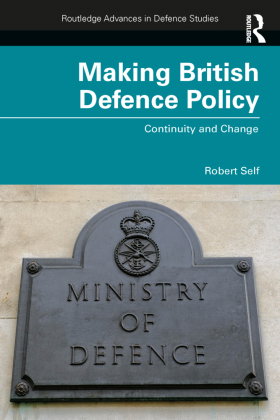
This book explores the process by which defence policy is made in contemporary Britain and the institutions, actors and conflicting interests which interact in its inception and continuous reformulation.
Rather than dealing with the substance of defence policy, this study focuses upon the institutional actors involved in this process. This is a subject which has commanded far more interest from public, Parliament, government and the armed forces since the protracted, bloody and ultimately unsuccessful British military involvement in Iraq and Afghanistan. The work begins with a discussion of two contextual factors shaping policy. The first relates to the impact of Britain's 'special relationship' with the United States over defence and intelligence matters, while the second considers the impact of Britain's relatively disappointing economic performance upon the funding of British defence since 1945. It then goes on to explore the role and impact of all the key policy actors, from the Prime Minister, Cabinet and core executive, to the Ministry of Defence and its relations with the broader 'Whitehall village', and the Foreign Office and Treasury in particular. The work concludes by examining the increasing influence of external policy actors and forces, such as Parliament, the courts, political parties, pressure groups and public opinion.
This book will be of much interest to students of British defence policy, security studies, and contemporary military history.