






Diese Website verwendet Cookies und ähnliche Technologien. Dabei handelt es sich um kleine Textdateien, die auf eurem Computer gespeichert und ausgelesen werden. Indem ihr auf "Alles akzeptieren" klickt, stimmt ihr der Verarbeitung von Daten, der Erstellung und Verarbeitung von individuellen Nutzungsprofilen über Websites und über Partner und Geräte hinweg sowie der Übermittlung eurer Daten an Drittanbieter zu, die eure Daten teilweise in Ländern außerhalb der Europäischen Union verarbeiten (GDPR Art. 49). Einzelheiten hierzu findet ihr in den Datenschutzhinweisen. Die Daten werden für Analysen und für eigene Zwecke Dritter verwendet. Weitere Informationen, auch über die Datenverarbeitung durch Drittanbieter und die Möglichkeit des Widerrufs, findet ihr in den Einstellungen und in unseren Datenschutzhinweisen. Hier könnt ihr mit den notwendigen Tools fortfahren.
- Verlag: Taylor & Francis
- Autor: David M. Rosen
- Artikel-Nr.: KNV96362703
- ISBN: 9781032044972
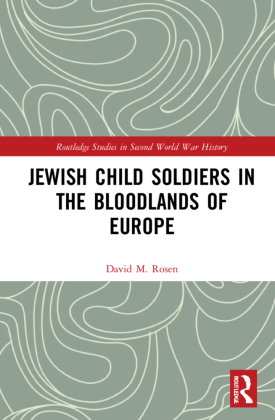
This book is about the experiences of Jewish children who were members of armed partisan groups in Eastern Europe during World War II and the Holocaust. It describes and analyze the role of children as activists, agents, and decision makers in a situation of extraordinary danger and stress. The children in this book were hunted like prey and ran for their lives. They survived by fleeing into the forest and swamps of Eastern Europe and joining anti-German partisan groups. The vast majority of these children were teenagers between ages 11 and 18, although some were younger. They were, by any definition, child soldiers, and that is the reason they lived to tell their tales. The book will be of interest to general and academic audiences. There is also great interest in children and childhood across disciplines of history and the social sciences. It is likely to spark considerable debate and interest, since its argument runs counter to the generally accepted wisdom that child soldiers must first and foremost be seen as victims of their recruiters. The argument of this book is that time, place, and context play a key role in our understanding of children's involvement in war and that in some contexts children under arms must be seen as exercising an inherent right of self-defense.