






Diese Website verwendet Cookies und ähnliche Technologien. Dabei handelt es sich um kleine Textdateien, die auf eurem Computer gespeichert und ausgelesen werden. Indem ihr auf "Alles akzeptieren" klickt, stimmt ihr der Verarbeitung von Daten, der Erstellung und Verarbeitung von individuellen Nutzungsprofilen über Websites und über Partner und Geräte hinweg sowie der Übermittlung eurer Daten an Drittanbieter zu, die eure Daten teilweise in Ländern außerhalb der Europäischen Union verarbeiten (GDPR Art. 49). Einzelheiten hierzu findet ihr in den Datenschutzhinweisen. Die Daten werden für Analysen und für eigene Zwecke Dritter verwendet. Weitere Informationen, auch über die Datenverarbeitung durch Drittanbieter und die Möglichkeit des Widerrufs, findet ihr in den Einstellungen und in unseren Datenschutzhinweisen. Hier könnt ihr mit den notwendigen Tools fortfahren.
- Verlag: Taylor & Francis
- Autor: Pavla Slavícková
- Artikel-Nr.: KNV96363789
- ISBN: 9780367544324
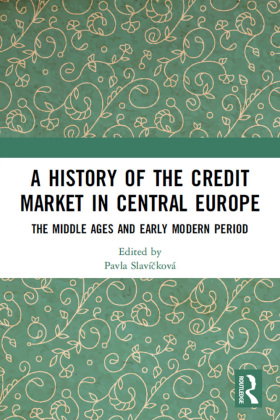
This is the first comprehensive study of loans and debts in Central European countries in the Middle Ages and Early Modern Period. It outlines the issues of debts and loans in the Czech lands, Poland and Hungary, with respect to the influence of Austria and Germany. It focuses on the role of loans and debts in medieval and early modern society, credit markets in these countries, the mechanism of lending and borrowing, forms of credit, availability of loans, frequency of credits dealings, range of lending business, and last, but not least, the financial relationships inside the social classes and between them.
The research presented in the book is based on a wide range of resources including credit contracts and agreements, evidence of loans and debts of courts, accounting of nobility, towns, churches and guilds, merchant diaries and Jewish registers, as well as other financial records. It covers a wide range of historical disciplines including economic and financial history, social history, the history of economic thought as well as the history of everyday life. It also contains a wealth of case studies, which offer, for the first time in English, a comprehensive and representative sample of the most up-to-date Central European research on the history of loans and debts and serves as a basis for a comparison with the other parts of Europe during the same period.
The book is designed primarily for postgraduates, researchers and academics in financial, economic and historical sciences but will also be a valuable resource for students of business schools.